Lifestyle Guide
Cape Coral: A City Built Around the Water

By Larissa Locke
Expert Real Estate Advisor · Integrity 🌴 1st 🌴 Group · eXp Realty · FL License #3407292
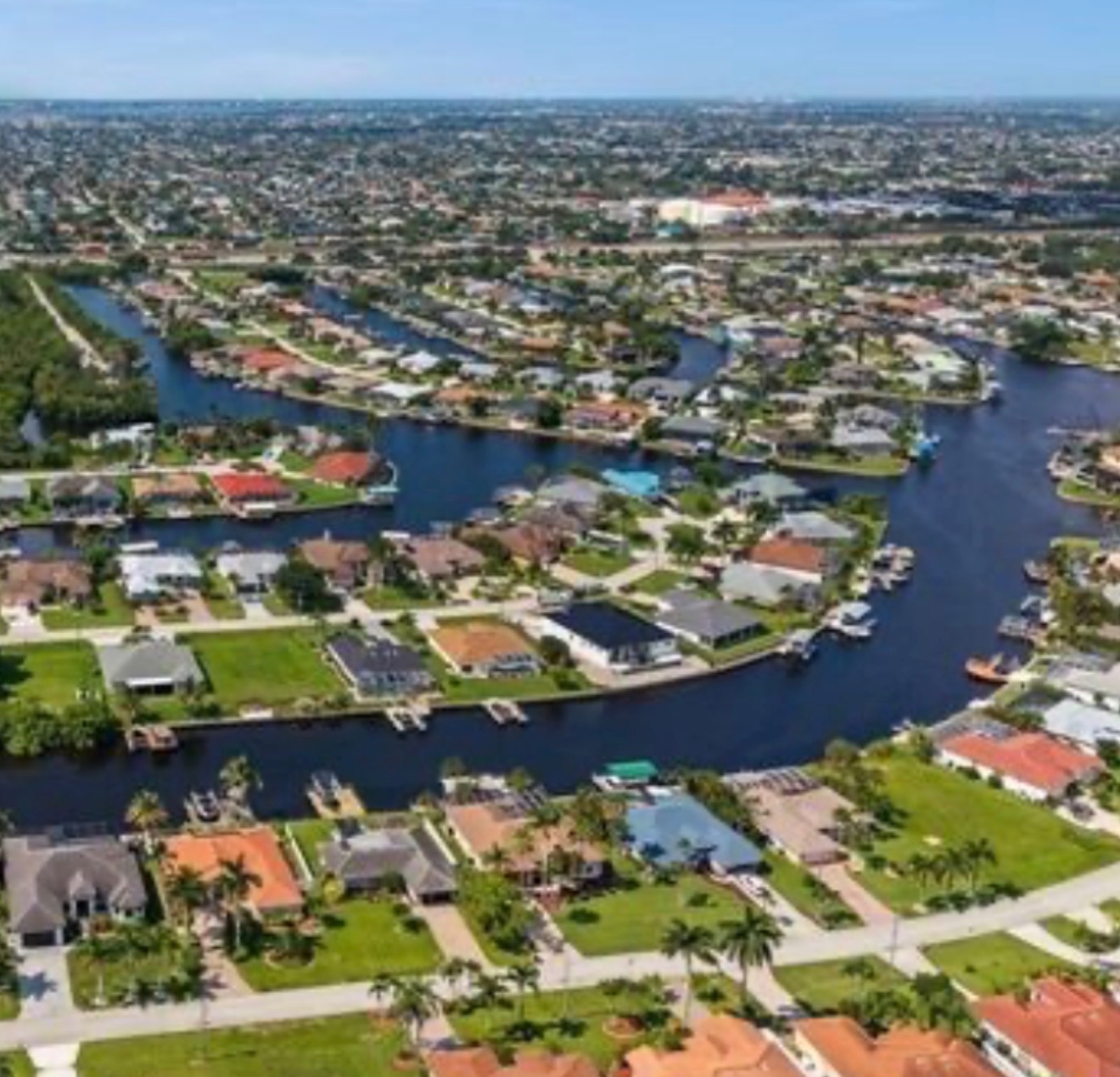
Cape Coral has more canal frontage than any city in the world — over 400 miles of canals, stretching past Venice, Italy, for that distinction. About 222 of those miles are saltwater, and many of them offer direct access to the Gulf of Mexico. That is not a marketing line. It is the reason this city exists the way it does.
If you have ever wondered what it actually means to live on the water in Southwest Florida — not near the water, not fifteen minutes from a ramp, but truly on the water — Cape Coral is the clearest example I can show you. Here is what that lifestyle looks like from the inside.
What Does "Direct Gulf Access" Actually Mean?
In most coastal cities, getting to open water requires a plan. You trailer your boat to a public ramp, wait for a spot, launch, navigate back through a series of turns and shallow passages, and then — finally — you are out. In Cape Coral, if you live on a Gulf-access saltwater canal, you pull out of your driveway, back your boat into your own private dock, and leave. No trailer. No ramp. No waiting.
The saltwater canals connect to the Caloosahatchee River, which flows into San Carlos Bay and opens to the Gulf of Mexico. From most Gulf-access homes, you can reach open water in 30 to 60 minutes, depending on your starting canal and where you are heading. There are no bridges or locks blocking the route on most saltwater corridors — that is a detail that matters more than it sounds like, because it determines what size boat you can keep at your dock and how far you are willing to travel on any given Tuesday.
There are also about 156 miles of freshwater canals in Cape Coral. These are popular with kayakers and freshwater anglers, and they offer a quieter, more private experience. They do not connect to the Gulf, but they have their own appeal — calm water, no boat traffic, and easy fishing from your backyard.
The Fishing Culture Is Real — and It Starts at Your Dock
If you enjoy fishing, Cape Coral is one of the most accessible places in Southwest Florida to do it consistently. The canals themselves are home to snook, sheepshead, mangrove snapper, mullet, and jacks. In the freshwater canals, you can catch largemouth bass and bluegill without leaving your backyard.
Head out toward Matlacha Pass or the open Gulf, and the variety expands significantly. Tarpon, spotted sea trout, redfish, cobia, permit, grouper, and kingfish are all within reach on a day trip. The inshore flats around Pine Island Sound and San Carlos Bay are particularly productive — sight-fishing for reds on a calm morning is one of those experiences that reminds you why people move here.
What makes Cape Coral different from other fishing communities in the region is the convenience. You are not planning a full-day expedition just to get your line wet. The fish are there, in the water behind your house, seven days a week. That changes the rhythm of how you spend your time.
Weekend Cruises, Sunset Runs, and Day Anchoring
The boating community here is not just about fishing. It is a full culture of people who built their lives around the water — and the calendar reflects it.
A Saturday morning cruise to Sanibel takes about 20 to 30 minutes from most Gulf-access homes. You anchor off Bowman Beach or Lover's Key, spend the day on the sandbar, and head home in time for dinner. Captiva is a little farther — roughly 40 minutes — and well worth the trip for a longer day. The restaurants at the north end of Captiva are accessible by water, and arriving by boat changes the experience entirely.
Sunset runs up the Caloosahatchee River are a regular habit for a lot of Cape Coral boaters. You head east as the afternoon light softens, cut the engine somewhere between the Midpoint Bridge and the W.P. Franklin Lock, and drift. The river is wide enough to feel open, calm enough to relax, and the views back toward Cape Coral at golden hour are the kind of thing that stops making sense to people who have not seen them.
Then there are the day anchoring spots — areas in Matlacha Pass or near the Sanibel Causeway where you can drop anchor, set up a canopy, and spend the entire day on the water without moving. It is one of the most underrated parts of living here, and it is available to anyone with a boat and a Saltwater canal home.
The City Was Designed Around Its Waterways
Cape Coral was not built first with waterways added later. The entire city was planned and developed as a water-oriented community from the beginning — one of the largest pre-planned unit developments in the United States when it was established in the late 1950s by the Rosen Brothers. The canal system is not a feature of the city. It is the structure of it.
The canals were engineered to provide the maximum number of homes with waterfront access. That is why the city has the shape it does — a pattern of residential neighborhoods organized around waterways, with commercial corridors and amenities layered on top. When you look at a satellite image of Cape Coral, what you see first is the water. That is by design.
This matters for daily life in a practical way. A significant percentage of homes in Cape Coral sit on water, which means the boating lifestyle is not concentrated in one exclusive waterfront district. It is distributed across the entire city. You do not need to live in a gated estate to have a dock behind your house.
Cape Coral vs. Other Coastal SWFL Cities: Near the Water vs. On the Water
This is the distinction I want to make clear, because it is the one that matters most when you are deciding where to live.
Naples has beautiful waterfront neighborhoods — Aqualane Shores, Port Royal, Park Shore — and they are some of the most prestigious addresses in the state. But they are a specific slice of the city. Most of Naples is not on the water. You can live in Naples and be close to the Gulf, but the canal-front lifestyle is concentrated and priced accordingly.
Bonita Springs has its share of waterfront living along the Imperial River and back-bay areas, but again, it is not the defining feature of the city as a whole. Fort Myers has riverfront and canal options, but they are a smaller portion of the total housing stock.
Cape Coral is different because the water is woven through almost everything. More than 400 miles of canals, a huge inventory of waterfront homes across a wide range of price points, and a city layout that puts the water at the center of daily life. If the water is not a nice addition to your weekend but a regular part of your Tuesday, Cape Coral is built for that.
A Note on Price Points
Cape Coral waterfront homes range from the high $300s to well over $1 million, depending on canal access type, lot size, and proximity to the Gulf. Gulf-access saltwater canal homes typically command a premium over freshwater canal properties, and direct waterfront lots with wider canals and southern exposure are at the top of the range. Compared to similar waterfront living in Naples or Bonita Springs, Cape Coral often offers more value per square foot — and more waterfront inventory overall.
What kind of lifestyle does Cape Coral actually support?
If your version of a good Saturday involves a morning fishing trip, an afternoon at the sandbar, and a sunset run back through the canals — Cape Coral supports that without effort. If you want to boat to Sanibel for lunch, anchor off a quiet beach, and be home before dark — it is built for that. If you want your dock to be as natural a part of your home as your kitchen — this is one of the few cities in Florida where that is true by design.
The water is not a marketing feature here. It is the infrastructure. And for the right buyer, that makes all the difference.
If Cape Coral's waterfront lifestyle sounds like the kind of life you want to explore, I would be glad to walk you through what is available — which canals offer true Gulf access, which neighborhoods match your price point, and what the market looks like right now. No pressure, just honest guidance.
Successfully,
From Larissa
Larissa Locke is an Expert Real Estate Advisor with Integrity 🌴 1st 🌴 Group at eXp Realty, serving Naples, Bonita Springs, Estero, Fort Myers, and the greater Southwest Florida market. Licensed in 2018, with over 30 years of client-first service spanning healthcare and real estate, she brings a trusted, strategic approach to every transaction. Florida License #3407292.