Buyer Guidance
Are There Hidden Costs Like CDD or MSTU Bonds in Southwest Florida?

By Larissa Locke
Expert Real Estate Advisor · Integrity 🌴 1st 🌴 Group · eXp Realty · FL License #3407292
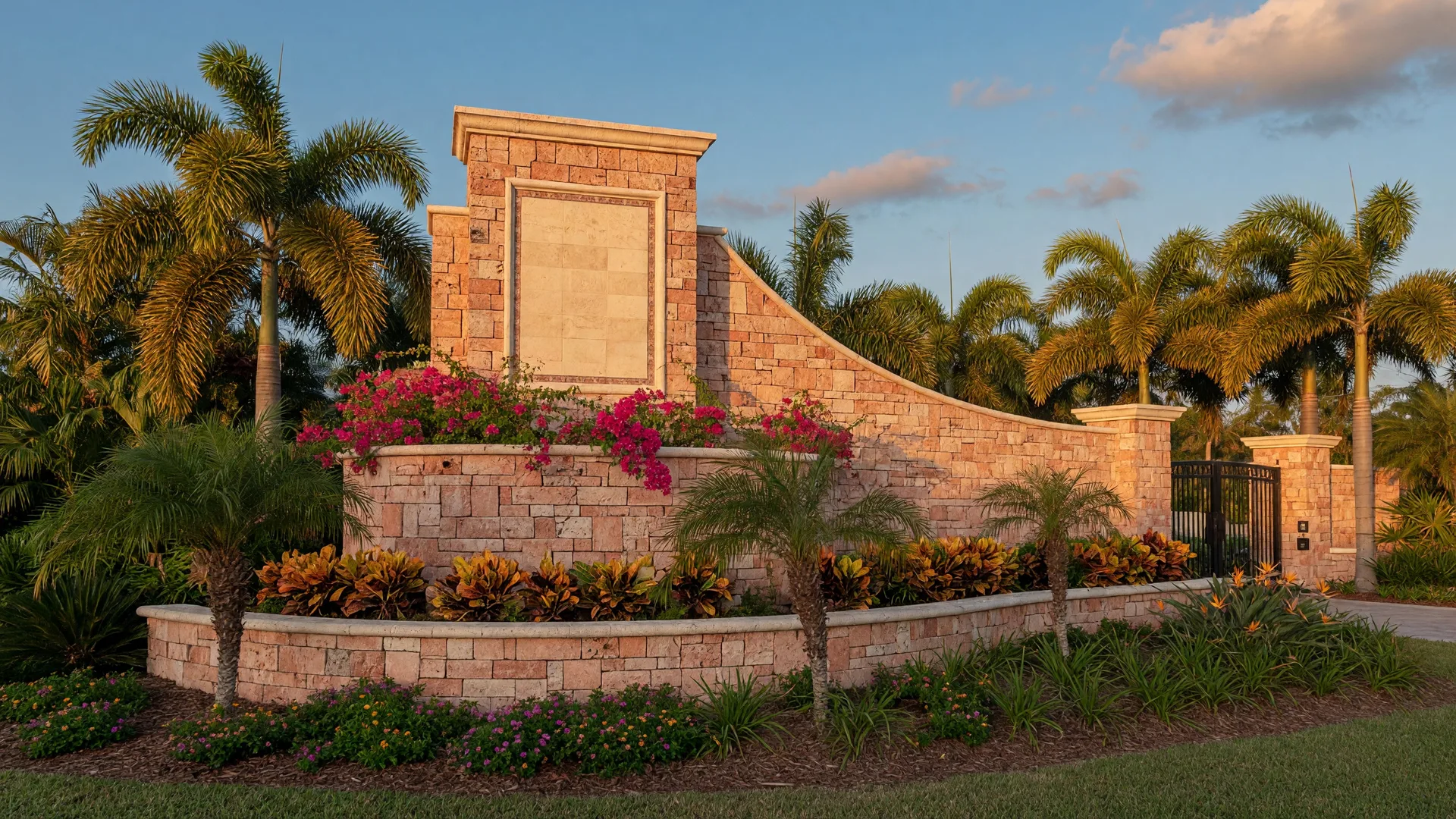
You find a home that checks every box on your list. The price is right. The neighborhood is exactly what you are looking for — newer construction, resort-style amenities, manicured landscaping. But then you look more closely at the tax bill, and there it is: an extra line item you were not expecting. A CDD assessment. An MSTU fee. Suddenly the true monthly cost of that home is higher than the listing suggested.
These fees are not disclosed on the listing sheet, and many buyers — especially those relocating from out of state — do not know to look for them. But they are real costs that attach to the property, not the owner, and they do not go away when the first owner sells. Understanding them is essential to making an informed purchase decision in Southwest Florida.
What is a CDD — Community Development District?
A Community Development District, or CDD, is a financing mechanism used by developers in Florida to pay for the upfront infrastructure costs of a new community. When a developer builds a large planned community — roads, water and sewer lines, stormwater management, street lighting, parks, clubhouses, and other amenities — those improvements can cost tens or hundreds of millions of dollars. Rather than bearing the full cost themselves and raising the price of every lot, the developer creates a CDD. The district issues tax-exempt municipal bonds to pay for the infrastructure, and the debt is repaid over time through annual assessments on the property owners within the district.
In practical terms, this means the person who buys a home in a CDD community inherits a share of the district's bond debt. That debt appears as an additional line item on the annual property tax bill. It is not part of the HOA fee, and it is not included in the mortgage payment unless the lender sets up an escrow account for taxes and assessments.
Which Southwest Florida communities have CDDs?
CDDs are most common in newer, master-planned communities. In Southwest Florida, you will find them throughout:
- Babcock Ranch — One of the largest CDD-financed communities in the region. The assessments cover the community's extensive infrastructure, parks, and sustainability features.
- Estero — Several newer developments in and around Estero carry CDD assessments for roads, water management, and amenities.
- Cape Coral — Some neighborhoods within Cape Coral, particularly newer sections, have CDDs for canal maintenance and drainage infrastructure.
- Fort Myers — Communities like Treeline Avenue corridor developments and areas near Gulf Coast Town Center may include CDD assessments.
- Bonita Springs — Select golf-course and lifestyle communities use CDD financing for their amenity packages.
- Naples — While many older, established Naples neighborhoods do not have CDDs, newer communities on the eastern side of Collier County often do.
CDD assessments vary widely. They can range from as little as $500 per year in a community where most of the bond has been paid down, to $4,000 or more per year in a newer development where the bond was issued recently and the debt is still substantial.
The assessment amount is not fixed forever. Most CDD bonds are structured to be paid off over 20 to 30 years. As the debt is retired, the annual assessment decreases and eventually drops to zero. However, some CDDs also levy an ongoing operations and maintenance assessment that continues indefinitely to cover the cost of maintaining the community's common areas and infrastructure.
What is an MSTU — Municipal Service Taxing Unit?
A Municipal Service Taxing Unit, or MSTU, is different from a CDD. MSTUs are established by county or municipal governments to fund specific services in a defined area. They appear as additional line items on your property tax bill.
In Southwest Florida, MSTUs are most commonly used in unincorporated areas — parts of Lee and Collier Counties that are not within the boundaries of a city like Naples or Fort Myers. Common MSTU-funded services include:
- Fire protection and emergency medical services — In areas served by independent fire districts rather than a municipal fire department.
- Library services — Funding for county library systems in unincorporated communities.
- Road maintenance and street lighting — Keeping local roads paved, cleaned, and lit in areas where the county is responsible for infrastructure.
- Stormwater management — Drainage system maintenance and flood control in specific neighborhoods.
- Law enforcement — Additional sheriff's patrols in some unincorporated areas.
Unlike a CDD assessment, an MSTU is not debt-financed infrastructure — it is an ongoing operational tax. It does not go away after 30 years. It is a permanent cost of living in that service area.
MSTU rates vary by area and are typically based on the taxable value of your property. They may be charged as a flat fee per parcel, a millage rate per $1,000 of assessed value, or a combination. In some Southwest Florida communities, the combined MSTU fees add several hundred to over a thousand dollars per year to the tax bill.
Why CDD and MSTU costs matter to your purchase decision
The reason these fees matter is straightforward: they increase the true annual cost of owning a home, and they are not always obvious from the listing.
Consider a home listed at $650,000 in a newer Estero community. The HOA fee is $200 per month — manageable. But the CDD assessment is $2,800 per year, and the MSTU for fire and library services adds another $600. That is an extra $3,400 per year, or roughly $283 per month, that is not captured in the HOA fee or the mortgage payment. The true monthly carrying cost of the home is significantly higher than what the buyer may have budgeted for.
This matters for several reasons:
- Affordability calculations. If you are budgeting based on the mortgage payment and HOA alone, you may underestimate your total housing cost by thousands of dollars per year.
- Resale value. High CDD assessments can affect the pool of buyers who are willing and able to purchase a home in a given community. A home in a community with a $3,500 annual CDD is competing against homes with no CDD at a similar price point.
- Tax implications. CDD assessments are not deductible as mortgage interest. They are property assessments. MSTU fees may be deductible as property taxes, depending on your tax situation and filing status, but that is not something to rely on.
- Longevity. A CDD assessment will eventually decrease and end as the bond is paid off. An MSTU will not. Knowing the difference helps you evaluate the long-term cost trajectory of the property.
How to find out whether a property has CDD or MSTU fees
These fees are public record. The challenge is knowing where to look and what to ask. Here are the steps every buyer should take:
- Check the county property appraiser's website. Lee County and Collier County each maintain searchable property tax records online. Enter the property address and pull up the most recent tax bill. CDD assessments appear as a separate non-ad valorem assessment line item. MSTU fees appear under the taxing authority section.
- Ask your listing agent directly. A knowledgeable listing agent in Southwest Florida should know whether the property is in a CDD and what the current annual assessment is. If they do not know, that is a red flag. Your buyer's agent should ask on your behalf.
- Review the HOA or condo documents. The community's governing documents — often provided during the due diligence period — will reference the CDD and any MSTU obligations. Your real estate attorney or title company can review these for you.
- Order a tax certificate search. Title companies routinely run tax and assessment searches as part of the closing process. You can request a preliminary report showing all assessments against the property before you go under contract.
- Ask the seller for the previous year's tax bill. The current owner's most recent tax bill is the single best document for understanding the total property tax and assessment burden. Your agent can request it as part of the initial due diligence.
An experienced buyer's agent will make these checks standard practice. If your agent is not proactively asking about CDDs and MSTUs, consider whether they have the local knowledge you need to make a fully informed decision.
CDD vs. HOA: What is the difference?
Buyers often confuse CDD assessments with HOA fees because both appear as additional costs on top of the mortgage. But they are fundamentally different:
- An HOA fee pays for the ongoing operation and maintenance of the community — landscaping, amenities, management, insurance for common areas, and reserve contributions. It is set by the homeowners association board and can increase over time based on the budget.
- A CDD assessment pays for the debt service on bonds issued to build the community's infrastructure in the first place. It is set by the CDD board based on the bond repayment schedule. While the operations-and-maintenance portion of a CDD assessment may fluctuate, the debt-service portion is fixed until the bonds are retired.
In many communities, you pay both. The HOA covers the day-to-day — and the CDD covers the infrastructure that made the community possible in the first place. Knowing the difference helps you understand what you are paying for and whether those costs are temporary or permanent.
The Bottom Line
CDD and MSTU fees are not hidden in the sense that they are secret — they are public record and appear on every property tax bill. But they are hidden in the sense that they do not appear on the listing sheet, the Zestimate, or the mortgage pre-approval calculation. A buyer who does not know to look for them may not discover them until they receive their first tax bill, months after closing.
The solution is simple: know what to ask, know where to check, and work with an agent who makes total cost transparency a non-negotiable part of every transaction. A good agent does not just show you homes — they show you the complete financial picture of each one.
Still not sure what fees could be hiding in your next home?
Larissa makes sure you know ALL the costs before you commit — no surprises after closing. Whether you are buying a waterfront condo in Naples, a villa in Bonita Springs, a single-family home in Estero, or a new-construction property in Babcock Ranch, she will walk you through the complete cost picture — CDD assessments, MSTU fees, HOA dues, insurance obligations, and everything else that affects your monthly carrying cost.
Larissa Locke · Expert Real Estate Advisor · Integrity 🌴 1st 🌴 Group at eXp Realty · FL License #3407292 · Serving Naples, Bonita Springs, Fort Myers, Estero, and Southwest Florida