Lifestyle Guide
How Do I Know I'm Choosing the Right Community in Southwest Florida?

By Larissa Locke
Expert Real Estate Advisor · Integrity 🌴 1st 🌴 Group · eXp Realty · FL License #3407292
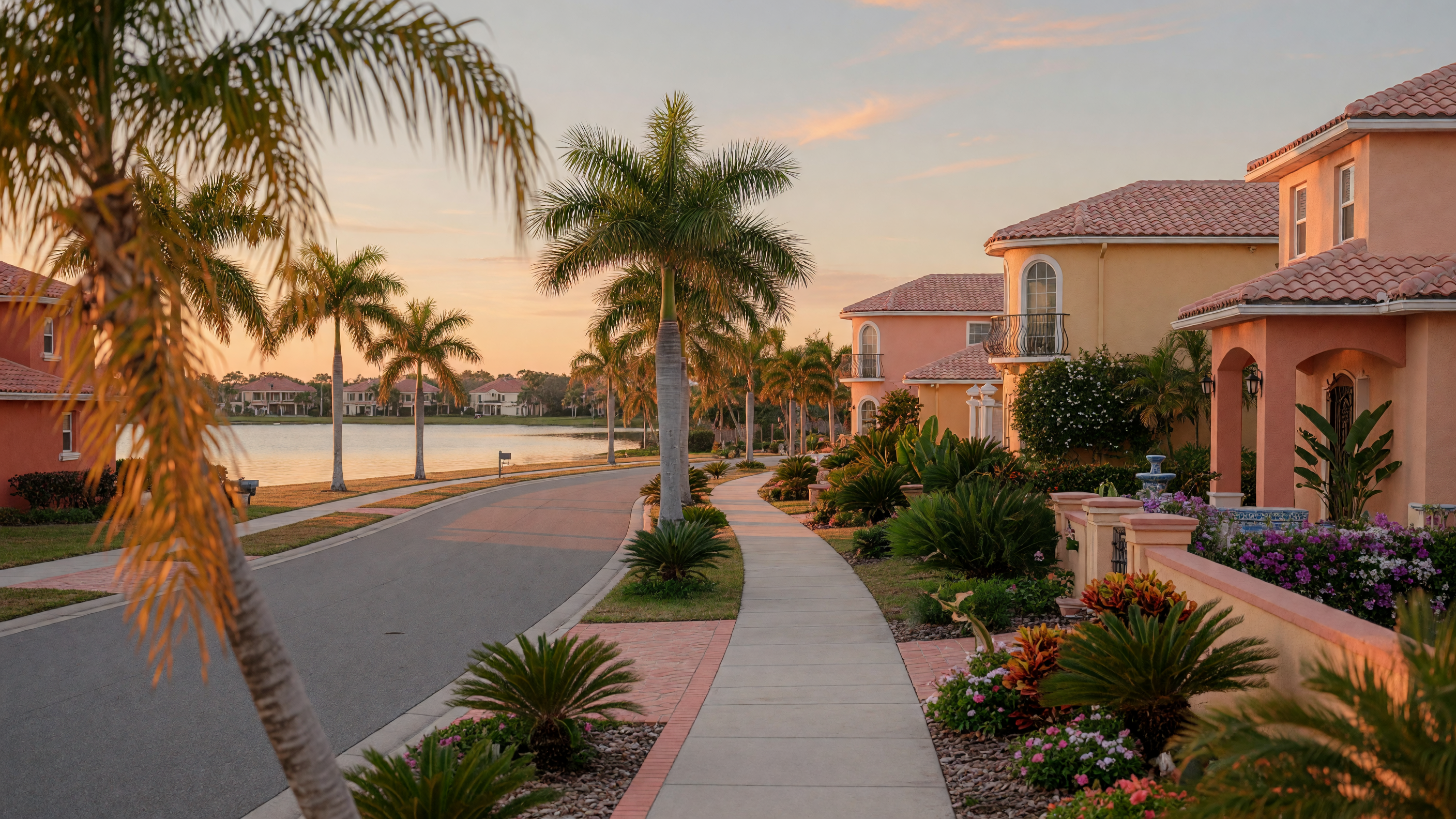
One of the questions I hear most often — and one I'm glad people ask — is some version of "How do I really know I'm choosing the right community?" It usually comes after someone has spent a few days touring properties and realized that the house itself is only part of the equation. The neighborhood, the rhythm of daily life, the people you'll live near — these things shape your experience far more than the square footage.
I've sat across from enough buyers at this stage to know that the question carries real weight. It's not just about making a smart financial decision. It's about your next chapter, your peace, and the lifestyle you've worked for. So I want to walk through this the same way I would if we were sitting down over coffee — not with a checklist designed to sell you something, but with the kind of honest guidance that leads to confidence.
Why this decision feels different from buying a house anywhere else
Here's the thing: when you buy in Southwest Florida, you're not just buying a home — you're buying into a specific way of life. In Naples, a golf community might mean something completely different from a golf community in Bonita Springs or Estero. One might be a full-time social hub with a packed calendar and tight-knit year-round residents. Another might slow to a quiet hum from May through October, with most neighbors heading north. Neither is inherently better — but one will fit your life, and the other won't.
The emotional weight of this choice is real. You're not just asking "Do I like this house?" You're asking: Will I feel at home here? Will my days feel full in the right way? Will I connect with the people around me? Will this community support the life I want — not the one I think I should want?
Those are the right questions. And they deserve honest answers.
The questions most buyers don't think to ask
After years of helping people navigate this process, here are the questions that almost always lead to better decisions — and that most people don't think to raise until after they've moved in.
What's the social culture like year-round?
Some communities have a vibrant social calendar from October through April but go quiet in the summer. Others maintain a steady rhythm all year. If you're planning to live here full-time, a community that empties out from May to September can feel isolating — even if the amenities are top-tier. Ask directly: how many residents stay through the summer? What does the calendar look like in July versus January?
How are the HOA reserves funded?
This one matters in ways that don't become apparent until a special assessment hits. A well-funded reserve means predictable dues and planned maintenance. An underfunded reserve means you could be on the hook for unexpected costs — new roofs, road repaving, or seawall repairs. Ask for the reserve study. A healthy community has nothing to hide here.
What's the rental policy?
This shapes who your neighbors are. Communities with short-term rental allowances can feel transient — a different set of faces every week. Others require minimum lease terms of 30 days, 90 days, or a full year. Neither model is wrong, but they produce very different atmospheres. Think about whether you want neighbors who are invested in the community or visitors passing through.
Who are my neighbors — full-time or seasonal?
Along the same lines: ask about the owner-occupancy rate and the split between full-time and seasonal residents. If you're looking for deep, lasting connections with people who are there through every season, you'll want a higher percentage of year-round residents. If you prefer a seasonal rhythm where things quiet down in the summer, a community with more snowbirds might suit you well.
What's the noise level in summer versus winter?
A community that feels peaceful in August might have a very different energy in February — more traffic, fuller restaurants, livelier common areas. There's nothing wrong with seasonal ebb and flow; it's part of what makes Southwest Florida dynamic. But you should know what you're signing up for. Visit during peak season if you can. Talk to residents who live there year-round.
Evaluating different community types
Southwest Florida offers distinct community styles, each with its own trade-offs. Here's what I encourage buyers to think through for each one.
Golf communities
Naples alone has more than 90 golf courses, and many are woven into residential communities. The question isn't just whether you play golf — it's whether you want a golf-centric social life. Membership costs, club minimums, and whether the course is equity or non-equity all matter. Some buyers skip golf communities because they don't play, then realize later they would have enjoyed the social infrastructure even without a club in hand. Others join a golf community thinking they'll take up the sport and find they'd rather spend their time elsewhere. Be honest with yourself about how you actually spend your days.
Boating and waterfront communities
Gulf access, bay access, and river access are not the same thing. If boating is central to your lifestyle, you need to understand bridge clearances, channel depths, dock availability, and whether you can keep a lift at your property. Communities like Bonita Bay, Port Royal, and the beach-access neighborhoods of Naples each offer different boating experiences — and different price points to match.
Beach-access communities
Some communities have private deeded beach access. Others are a short walk or a quick drive. The difference might seem small on paper, but it shapes your daily rhythm. If walking to the beach in the morning is part of the lifestyle you want, prioritize communities where that's an everyday reality — not a planned outing.
Lock-and-leave options
Condominiums, coach homes, and certain single-family communities offer maintenance-free living where you can lock the door and travel without a second thought. These appeal to buyers who split time between multiple homes or who want to spend their retirement exploring rather than managing landscaping and pool service. If ease and flexibility matter more to you than square footage or a private yard, lock-and-leave can be a strong fit.
Full-time living versus seasonal use
This is a fundamental distinction, and it deserves more attention than it usually gets. A community that feels like a refreshing seasonal retreat for two or three months might not feel the same when you're living there through August heat, hurricane season, and the quieter summer months. Similarly, a community that's ideal for full-time living — with strong year-round social connections and steady rhythms — might feel like overkill if you're only there six weeks a year.
If you're buying for seasonal use, focus on ease: low-maintenance properties, communities with strong property management, and locations where you can arrive, settle in quickly, and enjoy every day you're there. If you're buying for full-time living, prioritize connection: year-round social infrastructure, proximity to the activities you'll actually do weekly, and neighbors who are equally invested in the community.
Why visiting at different times of day matters
One of the simplest and most overlooked pieces of advice I give: visit the community at different times. Drive through on a Tuesday morning and a Saturday evening. Walk the neighborhood at 7 AM and again at 4 PM. Notice the rhythm. Is it quiet when you want quiet? Lively when you want lively? Are there families with children if that matters to you? What does the traffic pattern look like during school drop-off or rush hour?
A community can feel one way during a 10 AM weekday showing and very different during a Friday evening when neighbors are out on their lanais or the community pool is full. Both versions are real — you just need to know which one you're buying.
Matching the community to the life you actually want
This is the part where I encourage buyers to set aside what they think they should want and get clear on what they actually want. I've worked with clients who assumed they needed a golf community because "that's what you do in Naples," only to realize their happiest days were spent kayaking and dining outdoors. Others assumed they wanted beachfront until they discovered they valued privacy and quiet streets more than a Gulf view.
Your community should fit the life you have — and the one you're building — not a version of life someone else prescribed. That might mean choosing a smaller home in a neighborhood you love over a larger one in a community that doesn't feel right. It might mean prioritizing walkability over water views. It might mean deciding that proximity to family matters more than proximity to the golf course. These are personal decisions, and there is no wrong answer — only the one that brings you peace and confidence.
How I help buyers navigate this
When someone I'm working with reaches this stage — the "how do I know?" stage — I don't push. I don't have a commission breath moment. What I do is listen, ask thoughtful questions, and share what I've learned from years of helping people find their footing in Southwest Florida.
Sometimes that means spending an extra afternoon driving through neighborhoods at different hours. Sometimes it means connecting a buyer with someone who already lives in a community they're considering, so they can hear it from a resident. Sometimes it means gently pointing out that what someone says they want and what their lifestyle actually calls for are not the same thing.
The goal is not to close a deal. The goal is clarity — the kind that lets you make a decision you feel good about for years, not weeks.
If you're thinking about communities in Naples, Bonita Springs, Estero, or anywhere along the Paradise Coast, I'm always available to talk through it. No pressure. Just guidance from someone who knows the area, understands the weight of the decision, and wants you to get it right.