Buyer Guidance
What Is the Condition of Critical Home Systems and Seawalls in Southwest Florida?

By Larissa Locke
Expert Real Estate Advisor · Integrity 🌴 1st 🌴 Group · eXp Realty · FL License #3407292
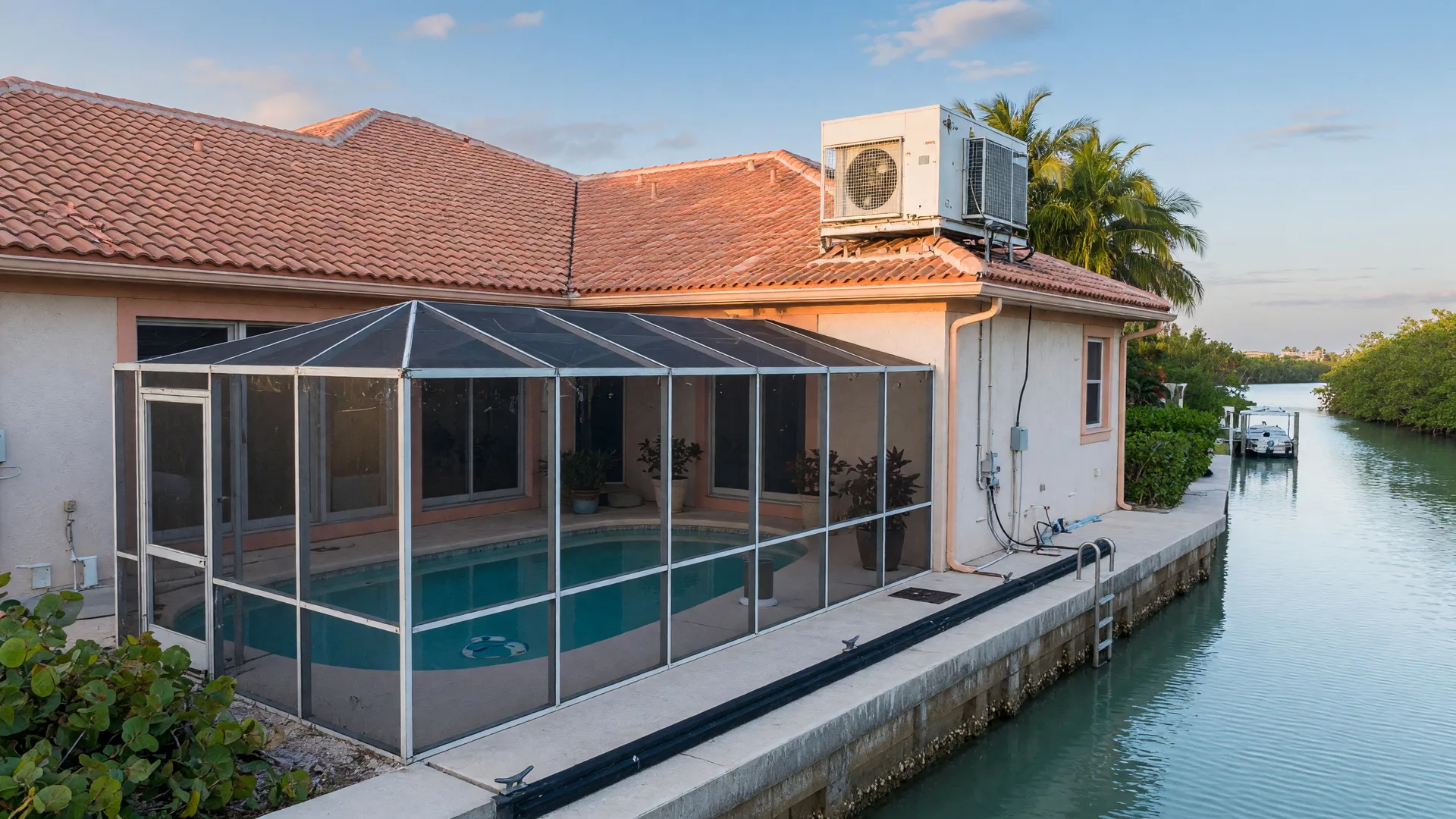
When you are buying a home in Southwest Florida — especially a waterfront property in Naples, Bonita Springs, Fort Myers, or Cape Coral — the visible features are only part of the story. The things that matter most to your long-term investment are often the things you cannot see at first glance: the age of the roof, the condition of the HVAC system, the structural integrity of the seawall, and whether the pool enclosure can withstand the next storm season.
These systems are expensive to repair or replace, and in Southwest Florida's coastal climate, they work harder than they would anywhere else. A thorough evaluation before you write an offer — and a strategic negotiation of repair credits when issues are found — can mean the difference between a confident purchase and a costly surprise two years in.
Below is a practical guide to the critical systems every buyer in this market should evaluate, and how I help my clients approach each one.
Roof Age and Condition
In Southwest Florida, the roof is the most important system in the home — not just for protection, but for insurability. Florida insurance companies are increasingly requiring roofs to be under 15–20 years old, or they will deny coverage or quote premiums that make ownership untenable. A roof that is approaching the end of its useful life is a negotiating point, and in some cases, a dealbreaker.
A standard 4-point inspection — required by many insurers before they will bind a policy — covers the roof, HVAC, electrical panel, and plumbing. The roof section will document the age of the roofing material, the number of layers, any signs of leaks or previous repairs, and the condition of flashing, vents, and soffits. In Florida, tile roofs are common, and while they can last 30 years or more, the underlayment beneath them may need replacement sooner. A roof that has been patched repeatedly or shows signs of active leakage is a red flag.
If the roof is near the end of its expected life, a buyer can negotiate for a credit toward replacement, or ask the seller to obtain a wind mitigation inspection that may produce insurance savings. In some cases, the seller may be willing to replace the roof before closing — particularly if their insurer has already flagged it.
HVAC Systems
Florida's heat and humidity mean air conditioning systems run nearly year-round. An HVAC unit in this climate works harder, cycles more frequently, and has a shorter lifespan than the same system in a temperate region. The average replacement cost for a residential HVAC system in Southwest Florida is $8,000 to $15,000 or more, depending on the size of the home and the efficiency rating of the replacement unit.
When evaluating a home's HVAC system, buyers should ask several questions:
- How old is the system? Most residential HVAC units last 10–15 years in Florida. A unit approaching or past that age is a near-term replacement candidate.
- Has it been serviced regularly? A system with documented annual maintenance is far more reliable than one with no service history. Maintenance records tell you the owner took care of the equipment.
- Has the coil been cleaned or replaced? Florida's salt air and humidity accelerate corrosion on AC coils. A corroded coil reduces efficiency and can lead to refrigerant leaks.
- Is the system sized correctly for the home? An oversized unit short-cycles and does not dehumidify properly. An undersized unit runs constantly and struggles to keep the home comfortable. Both conditions shorten equipment life.
A licensed HVAC contractor can evaluate the system during your inspection period and provide an estimate of remaining useful life. If the system is near the end of its life, a replacement cost credit is a reasonable request — and one I have negotiated successfully for many buyers.
Pool and Screen Enclosures
A screened-in pool is a hallmark of the Southwest Florida lifestyle, but the enclosures themselves are expensive to build and costly to repair. A typical screen enclosure for a residential pool can cost $10,000 to $25,000 or more to replace, depending on size, height, and materials. And because these structures are exposed to Florida's tropical storms and hurricane-force winds, they are frequently damaged.
When evaluating a pool and enclosure, pay attention to:
- Screen condition. Tears, holes, or rusted screening are obvious. But also look at the spline channels — if the screening is pulling away from the frame, the structure may have been compromised by wind.
- Frame integrity. Aluminum frames can corrode, especially in saltwater-adjacent properties. Check for rust spots, bent beams, or loose connections at the corners.
- Pool equipment. The pump, filter, heater, and salt cell (if applicable) all have finite lifespans. Pool equipment is expensive to replace — a new variable-speed pump alone can cost $1,500–$3,000 installed.
- Deck and coping condition. Cracks in the pool deck or loose coping tiles can indicate settling or drainage issues. Resurfacing a pool deck is a significant expense.
A pool inspection by a licensed contractor will identify structural issues, equipment condition, and code compliance. Many older screen enclosures do not meet current Florida building codes, and bringing them up to code can be a substantial cost.
Seawalls and Private Docks
For waterfront buyers in Naples, Fort Myers, Cape Coral, and Bonita Springs, the seawall and dock are not amenities — they are essential infrastructure. A failing seawall can threaten the property itself, not just the water access. And repair costs are substantial: a full seawall replacement on a standard waterfront lot can run $50,000 or more, and complex repairs involving tiebacks, cap beams, or erosion control can push that number higher.
Key factors to evaluate:
- Cracks and gaps. Visible cracks in the seawall, especially horizontal cracks, indicate structural stress. Gaps between wall sections can allow soil to wash out from behind the wall — a condition called scour that can lead to sudden failure.
- Erosion and settling. If the soil behind the seawall is settling, or if the wall itself is leaning or tilting, the structure is compromised. This is a major repair and should be evaluated by a marine structural engineer.
- Corrosion. In saltwater environments, steel reinforcement within seawalls can corrode and expand, causing the concrete to spall (flake off). Corrosion damage is progressive and expensive to remediate.
- Dock condition. Private docks should be inspected for rot (in wooden docks), corrosion (in aluminum docks), loose decking, and structural integrity of pilings. Docks that do not meet current building codes may need to be upgraded or replaced — and that can involve permitting delays with local authorities.
- Permitting. Any repair or replacement of a seawall or dock in Southwest Florida requires permits from the Florida Department of Environmental Protection and sometimes the US Army Corps of Engineers. These permits are not guaranteed and can take months to obtain. Buying a property with a known seawall or dock issue means inheriting that process.
For waterfront properties, I always recommend a separate seawall and dock inspection by a qualified marine contractor — not just a general home inspection. The cost of the inspection is modest compared to the cost of a surprise repair after closing.
How Larissa Helps Buyers Evaluate These Systems
I approach every buyer relationship the same way: we start with what you want to protect, and we build the strategy around that. When it comes to evaluating critical home systems, that means:
- Identifying the right inspectors. Not all inspectors are equal. I maintain a network of licensed, experienced contractors who know Southwest Florida's specific conditions — salt air, humidity, storm exposure, and the local permitting environment.
- Reviewing inspection reports with you. I do not just forward the PDF. I walk through the findings with you, explain what each item means in practical terms, and help you prioritize what matters versus what is cosmetic.
- Negotiating repairs or credits before closing. When an inspection reveals a significant issue — a roof near the end of its life, an aging HVAC system, a seawall in need of repair — I help you make a data-backed request for a repair or a credit at closing. The goal is to ensure you are not inheriting a problem that should have been addressed by the seller.
- Coordinating with your lender and insurance agent. In Florida, the condition of the roof, HVAC, electrical, and plumbing affect not just your decision to buy, but your ability to obtain insurance and financing. I coordinate with your team to make sure nothing is missed.
Before you buy waterfront, get an expert assessment.
I have represented buyers across Naples, Bonita Springs, Estero, Fort Myers, and Cape Coral — and I know what to look for when evaluating a property's critical systems. Whether you are buying a waterfront estate, a coastal condo, or a family home in a golf community, I will help you evaluate the property thoroughly and negotiate with confidence.
Call me at 239-823-4308 or email Larissa@larissalocke.com to schedule a private consultation.
Larissa Locke · Expert Real Estate Advisor
Integrity 🌴 1st 🌴 Group at eXp Realty
FL License #3407292
Buying a home in Southwest Florida — especially a waterfront property — is a significant investment. The roof over your head, the AC that keeps you cool, the pool that defines your weekends, and the seawall that holds your property together are all part of that investment. Evaluating them carefully before you close is not being cautious. It is being smart. And that is the standard I bring to every client I serve.