Buyer Guidance
What Should I Know Financially Before Buying a Luxury Home in Southwest Florida?

By Larissa Locke
Expert Real Estate Advisor · Integrity 🌴 1st 🌴 Group · eXp Realty · FL License #3407292
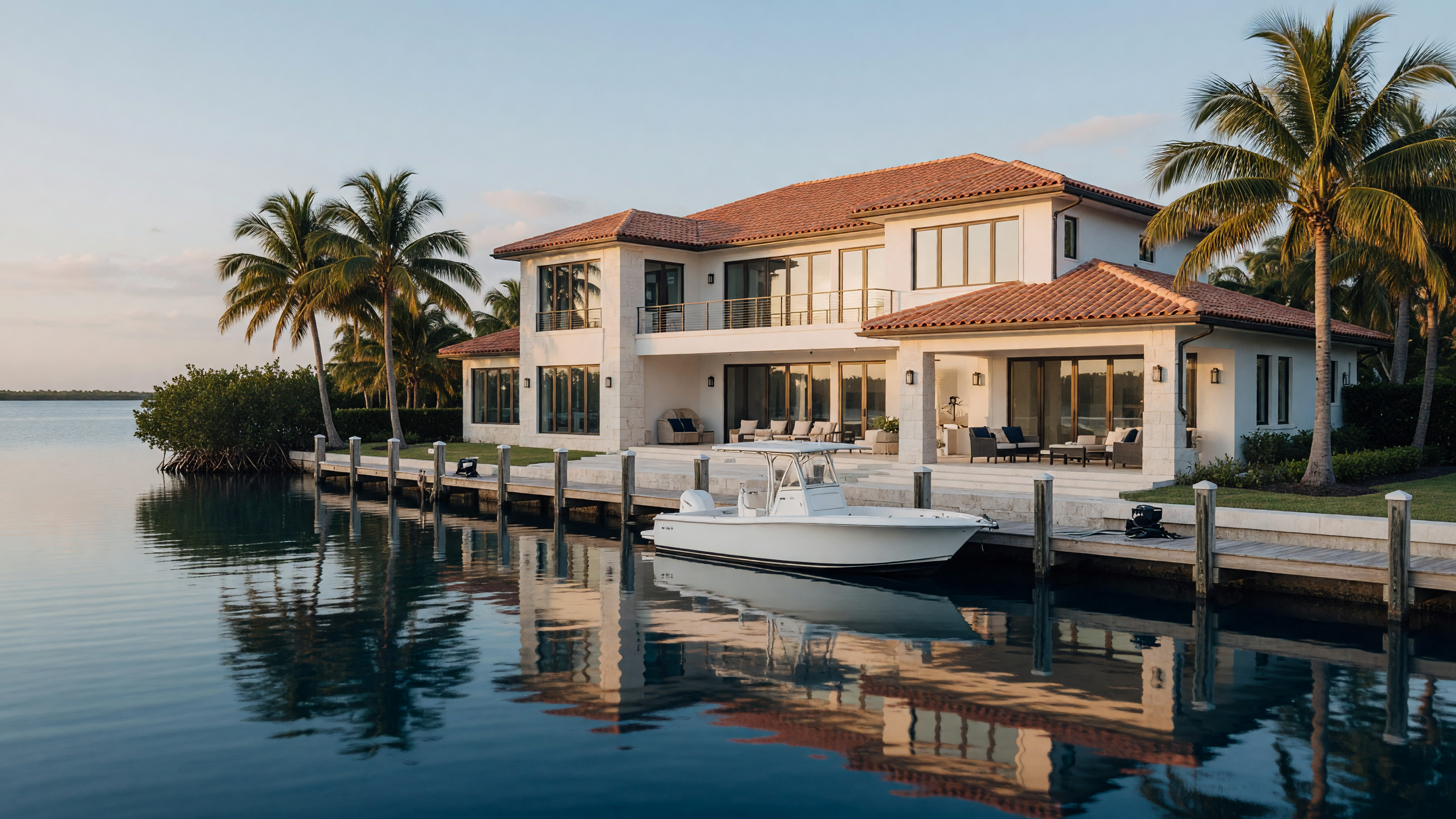
When buyers begin exploring luxury properties in Naples, Bonita Springs, or anywhere along the Paradise Coast, the conversation often starts with the home itself — the architecture, the view, the kitchen, the outdoor living space. Those things matter. But the financial questions that come after the showing are the ones that determine whether a purchase is actually the right move.
I have guided many buyers through this exact conversation, and the most confident ones are not the people who fell in love with the first waterfront property they saw. They are the ones who asked the hard questions early. Here are the financial layers I encourage every buyer to examine before signing a contract on a luxury home in Southwest Florida.
What insurance costs should I expect?
Insurance in Florida is not like insurance in most other states. On a luxury waterfront property, you are likely looking at three separate policies: a standard homeowners policy, a windstorm policy (often through a separate carrier or Citizens Property Insurance), and flood insurance if the property sits in a FEMA flood zone — which many waterfront homes in Naples and Bonita Springs do.
Annual premiums on a high-value coastal property can run from $10,000 for a modest inland home to $40,000 or more for a larger waterfront estate. Request a current CLUE report and recent insurance declarations from the seller. And ask your agent to connect you with a local insurance broker who specializes in high-value coastal homes — they will know which carriers are writing policies in the area right now, because that picture changes frequently.
How will Florida property taxes compare to where I am moving from?
Florida has no state income tax, which is one reason many buyers relocate here. But property taxes in Collier and Lee counties are not insignificant. A luxury home assessed at $2 million may carry an annual property tax bill of $20,000 to $28,000 depending on the millage rate and whether the homestead exemption applies.
When you move from a state like New York, New Jersey, Illinois, or California, the property tax picture often improves — but the absence of state income tax changes your overall financial equation. Run the numbers with your CPA before going under contract. I encourage every relocating buyer to model the full tax picture: income tax savings, property tax cost, and the impact of the Florida homestead exemption, which reduces the assessed value of a primary residence by up to $50,000 and caps annual assessment increases at 3% or the Consumer Price Index, whichever is lower. That cap becomes increasingly valuable the longer you own the property.
What should I look for in the HOA's financials?
In a luxury community, the homeowners association is effectively a small business managing millions of dollars in shared assets — pools, clubhouses, fitness centers, landscaping, private roads, and sometimes marina facilities. You want to know whether that business is well run.
Ask for the HOA's reserve study. A fully funded reserve means the association has set aside enough money to replace the roof on the clubhouse, resurface the pool, repave the roads, and handle other major capital projects without levying a special assessment. An underfunded reserve is a red flag — it means you could be handed a five-figure special assessment the year after you close.
Also review the HOA's operating budget, the delinquency rate on dues, and whether there is any pending or recent litigation involving the association. This is not glamorous reading, but it protects your financial position. I help my clients gather and review these documents so there are no surprises after closing.
What are the true carrying costs of a luxury property in Southwest Florida?
Beyond the mortgage, property taxes, and insurance, a luxury home carries additional fixed costs that add up quickly. Plan for:
- HOA or community fees — often $1,000 to $4,000 per month in gated golf and waterfront communities
- Landscaping and pool maintenance — $400 to $1,200 per month for a well-kept property
- Pest control — essential in Florida, roughly $60 to $150 per month
- Impact-window and shutter maintenance — an annual expense many buyers overlook
- Utilities — cooling a larger home in the Florida summer is expensive; expect $400 to $900 per month for electric alone during peak months
- Reserve contributions — setting aside 1% to 2% of the home's value annually for future repairs and capital improvements
On a $2.5 million property, total monthly carrying costs — excluding the mortgage — can easily reach $5,000 to $7,000. Knowing these numbers before you buy creates clarity and confidence in your decision.
Should I buy in my own name, an LLC, or a trust?
This is one of the most important conversations you will have — and it is not one your real estate agent should answer alone. The right ownership structure depends on your estate plan, your asset protection priorities, and your tax situation.
Buying in your personal name is the simplest path and preserves the homestead exemption, which can only be claimed by a natural person on their primary residence. An LLC may offer privacy and a layer of liability protection, but it sacrifices the homestead exemption and may complicate financing. A revocable trust is common for estate planning purposes and can hold title while preserving the homestead exemption, provided the trust is drafted and titled correctly under Florida law.
I tell every client: this is a question for your CPA and your estate planning attorney, not your real estate agent. My role is to make sure you ask the question at the right time — before closing — and to connect you with qualified local professionals if you do not already have them.
What holds resale value — and what does not?
In Southwest Florida, location is the foundation of resale strength. Waterfront property with direct Gulf access, a southern rear exposure, and a newer or well-maintained seawall typically holds value better than an inland lot on a busy road. Within luxury communities, homes on golf course lots can be more volatile — some buyers want the view, others want nothing to do with errant golf balls and course maintenance noise. Corner lots and homes on community entrance roads often sit longer.
Quality of construction matters tremendously. Impact-rated windows and doors, a concrete tile or metal roof in good condition, elevated construction above base flood elevation, and documented maintenance records all support resale strength. Overly customized interiors — the lime-green accent wall that felt bold in 2022 — narrow your buyer pool when you sell.
What is the difference between price and value?
Price is what the seller is asking. Value is what the property is worth based on recent comparable sales, condition, location, and market trajectory. In a market like Naples, where some sellers price aspirationally, overpaying is a real risk — even when inventory is tight.
A well-prepared comparative market analysis, paired with a professional appraisal, grounds the transaction in data. I prepare detailed market analyses for every buyer I represent, and I am candid when a listing price exceeds what the data supports. Protecting your equity starts with the purchase price you pay.
Why does the financial side matter as much as the property itself?
A luxury purchase is both emotional and strategic. You should love where you live. But you should also understand exactly what it will cost to own, maintain, insure, and eventually sell that property. The buyers who feel the most peace of mind after closing are the ones who examined every financial layer before they signed.
I bring a structured, patient approach to the financial side of every transaction — not because I am a CPA or an attorney, but because I have walked enough buyers through this process to know which questions need to be asked and which professionals need to be at the table. I listen first. I help you identify your priorities. Then I connect you with the right people — insurance brokers, CPAs, estate planning attorneys, wealth managers — so that every piece of your financial picture is considered.
Key Takeaway
The most confident luxury buyers in Southwest Florida are not the ones who move the fastest — they are the ones who ask the right financial questions early. Insurance costs, HOA reserves, tax strategy, ownership structure, and carrying costs all deserve careful review before you go under contract. That is how you protect your equity and make an informed decision you will feel good about for years.
If you are considering a luxury purchase in Naples, Bonita Springs, or anywhere along the Paradise Coast, I am happy to walk you through the financial layers in detail — no pressure, just the clarity you need to move forward with confidence. Reach out anytime.