Buyer Guidance
What Are the HOA and Condo Fees in Southwest Florida, and What Do They Cover?

By Larissa Locke
Expert Real Estate Advisor · Integrity 🌴 1st 🌴 Group · eXp Realty · FL License #3407292
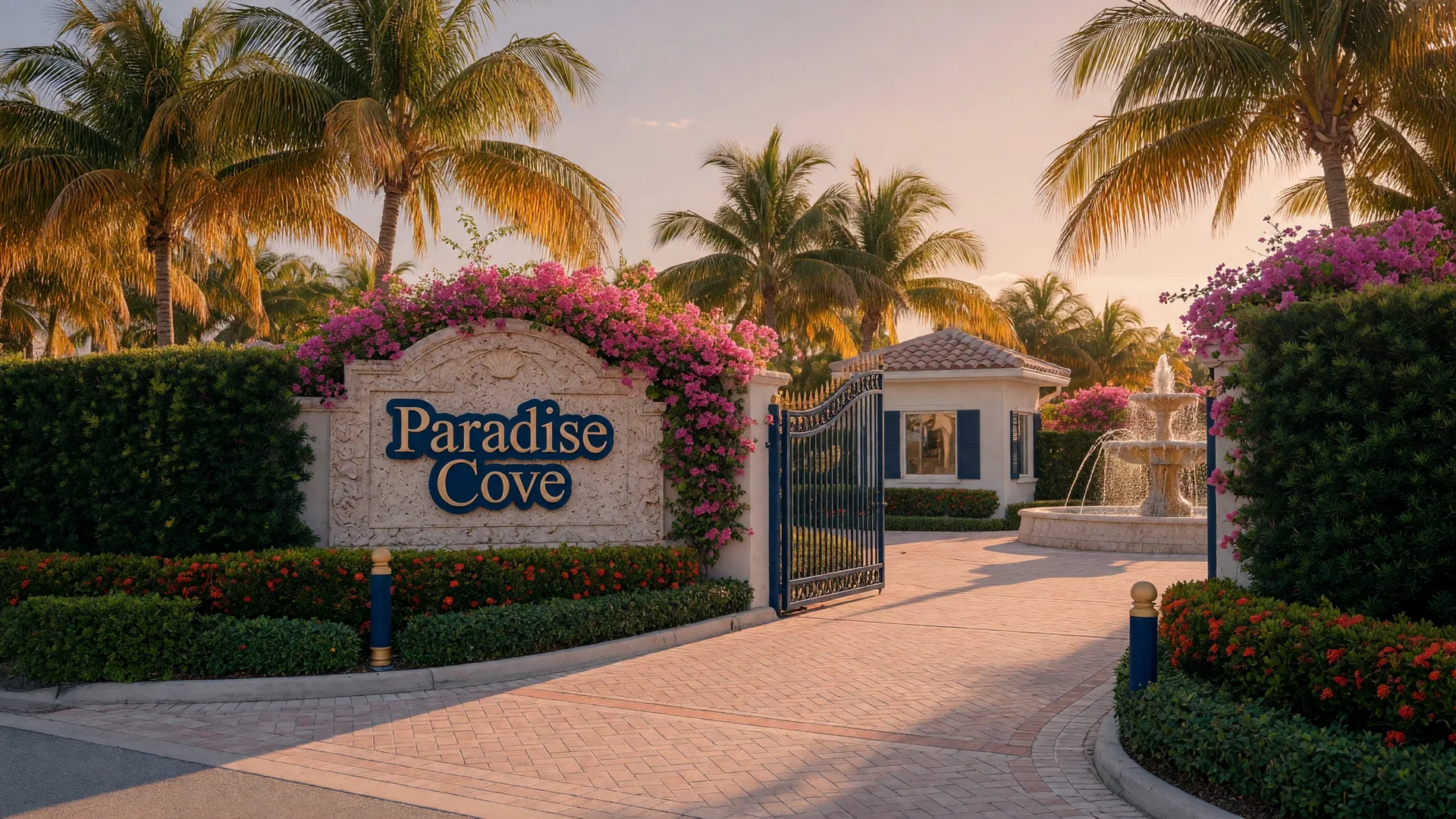
If you are buying a home in Southwest Florida — whether a single-family home in a gated community, a villa in a golf-country club, or a luxury condominium on the Gulf — you will almost certainly pay a homeowners association (HOA) or condominium association fee. The question is not whether you will pay one, but what you will get for it.
Fees in Southwest Florida vary widely. Some communities charge $100 per month. Others charge $1,000 or more. The difference is not arbitrary — it reflects what the community owns, maintains, and insures. Understanding what those fees cover, what they leave to you, and what happens when an association is underfunded is essential to making a confident purchase decision.
Why do HOA and condo fees vary so much in Southwest Florida?
Southwest Florida has an unusually high concentration of planned communities, condominium towers, and country-club developments — especially in Naples, Bonita Springs, Estero, and Fort Myers. Each one sets its own fee structure based on what it provides. The range is real, and it matters to your budget.
- $100–$300 per month — Typical for a single-family-home community where the HOA covers landscaping of common areas, basic amenities like a pool or small clubhouse, and trash service. The homeowner still maintains their own structure, yard, and interior.
- $300–$700 per month — Common in villa or townhome communities where exterior maintenance (roof, paint, siding, lawn care) is included. May also cover cable, internet, water, and a fitness center.
- $700–$1,000+ per month — Standard for luxury high-rise condominiums and country-club communities. These fees typically include building insurance, full-time staffing (front desk, concierge, maintenance), valet parking, pool and spa upkeep, fitness centers, social rooms, and significant reserve contributions.
- $1,000+ per month — Found in ultra-lifestyle communities with golf memberships, multiple dining venues, private beach access, marina privileges, and full-service concierge living. Some of these fees include a portion of the country-club membership dues.
The sticker price on a condo or villa is only half the story. The monthly fee is a fixed carrying cost that does not go away — and it can increase. Knowing what it covers is how you evaluate whether it is worth it.
What do HOA and condo fees typically cover?
The specific line items vary by community, but most Southwest Florida associations cover a standard set of expenses. Here is what you are typically paying for:
For single-family-home HOAs:
- Common-area landscaping and irrigation — Entranceways, medians, parks, and preserved green spaces are maintained by the association.
- Gate and security operations — In gated communities, the cost of the guardhouse, gate equipment, and security personnel is shared by all homeowners.
- Community amenities — Pools, tennis courts, pickleball courts, clubhouses, playgrounds, and fitness centers are collectively maintained.
- Trash and recycling — Many communities include curbside waste collection in the fee.
- Reserve fund contributions — A portion of every fee goes into reserves for future capital repairs: repaving roads, replacing the clubhouse roof, resurfacing the pool.
For condo and villa associations:
- Exterior maintenance — Roof replacement, exterior painting, siding or stucco repair, window and door maintenance (for the building envelope).
- Building insurance (master policy) — The association carries insurance on the structure, common areas, and liability. This is a significant cost driver, especially in coastal Florida where wind and flood exposure raise premiums.
- Landscaping and grounds — All exterior grounds, including your individual yard or patio area in many villa communities.
- Water, sewer, and trash — Many condos and villas include these utilities in the monthly fee.
- Cable and internet — A growing number of communities include bulk cable TV and high-speed internet as part of the fee.
- Amenities — Pools, fitness centers, saunas, community rooms, boat storage, and similar shared facilities.
- On-site staffing — Management, maintenance, concierge, and security personnel in larger buildings.
- Reserves — Mandatory reserve funding for capital improvements and major repairs is required by Florida law for condominium associations.
What do fees not cover?
This is where many buyers — especially those new to association living — are caught off guard. Even a high monthly fee does not cover everything.
- Interior maintenance and repairs. Everything inside your walls — plumbing, electrical, flooring, appliances, interior paint, cabinets, countertops — is your responsibility. Condo fees cover the building envelope, not your unit's interior.
- Personal property insurance (HO-6 for condos). The association's master policy covers the building structure and common areas. It does not cover your personal belongings, interior improvements, or liability for what happens inside your unit. Condo owners need an HO-6 policy — often called a "walls-in" policy — to fill the gap. Single-family homeowners need a standard homeowner's policy on top of the HOA's master policy.
- Special assessments. When the association's reserves are insufficient to cover an unexpected or major expense — a new roof, hurricane damage, pool resurfacing, a parking garage repair — the cost is passed to owners as a special assessment. These can range from a few hundred dollars to tens of thousands per unit. A well-funded reserve minimizes this risk. An underfunded one makes it almost certain.
Monthly vs. quarterly billing: what to ask
Most Southwest Florida associations bill monthly or quarterly. Monthly billing is straightforward — one predictable payment. Quarterly billing means a larger lump sum every three months, which can be a surprise if you are budgeting monthly for housing costs. Some associations offer a discount for paying annually.
The billing frequency is a small detail, but it matters for cash-flow planning. Ask how the association bills, whether there is a discount for annual payment, and what happens if a payment is late. Also ask whether fees have increased in the last three years and by how much — that trend tells you something about the association's financial trajectory.
Why reserves matter more than most buyers realize
Florida law requires condominium associations to fund reserves for capital expenditures and deferred maintenance. The requirement exists because too many associations were underfunding reserves to keep monthly fees low — and then hitting owners with massive special assessments when the roof or parking deck inevitably needed replacement.
A well-funded reserve is the single best indicator of a financially healthy association. Before you buy, ask your agent to request the association's reserve study. This document tells you:
- How much money the association has set aside for future repairs
- What major components (roof, paving, pool, elevators, HVAC) are scheduled for replacement and when
- Whether current funding levels are adequate to cover those future costs
- When the last reserve study was completed (Florida recommends updating every three years)
- What the likelihood of a special assessment is based on current funding levels
An association with fully funded reserves may have slightly higher monthly fees — but those fees are honest. An association with low reserves and low fees is not a bargain. It is a ticking special assessment.
Red flags every buyer should watch for
Not all associations are well-managed. Some warning signs are easy to spot if you know where to look:
- Pending or recent litigation. Lawsuits between the association and a developer, between owners and the board, or between the association and a contractor are expensive — and the cost eventually lands on owners. Your agent or attorney can ask about current or threatened litigation during due diligence.
- Low reserve funding. As discussed above, underfunded reserves are the leading cause of special assessments. Ask for the most recent reserve study and review it carefully, or have your agent or attorney help you interpret it.
- Frequent special assessments. If the community has levied special assessments in two of the last five years — or has one planned — that is a pattern, not a coincidence. It suggests the board is not budgeting realistically.
- Deferred maintenance. Visible signs that the common areas, buildings, or amenities are not being maintained — peeling paint, overgrown landscaping, cracked pavement, worn-out pool furniture — often reflect a cash-strapped or disengaged board.
- Rapidly increasing fees. Fee increases that significantly outpace inflation may indicate that the association was undercharging and is now catching up — or that a large capital expense is looming.
- Low owner occupancy (for condos). High rental ratios can change the character of a building and affect financing — some lenders will not make loans in buildings with more than 50% rentals.
Your buyer's agent should be asking these questions on your behalf. If they are not, ask them yourself — or consider whether you have the right agent. An experienced Southwest Florida agent knows which communities are well-managed and which carry risk, and they will help you make an informed decision before you commit.
The Bottom Line
HOA and condo fees are not just a line item in your monthly budget — they are a reflection of the community's financial health, the quality of its amenities, and the level of care its board brings to long-term planning. A higher fee in a well-managed community with strong reserves is often a better value than a lower fee in an association that is deferring maintenance and passing costs to owners as special assessments.
When you are evaluating a property in a community with an HOA or condominium association, ask the hard questions. Look at the reserve study. Understand what is and is not covered. Budget for your own insurance and interior maintenance. And work with an agent who knows the difference between a healthy association and one that will cost you more than the monthly fee suggests.
Still have questions about HOA and condo fees?
Confused by what an association covers — or does not cover? Larissa breaks down the financial side of every community she shows to clients. Whether you are looking at a $200/month HOA in a single-family neighborhood or a $1,200/month luxury condominium on the Gulf, she will help you understand exactly what you are paying for — and whether the numbers add up for your lifestyle and budget.
Larissa Locke · Expert Real Estate Advisor · Integrity 🌴 1st 🌴 Group at eXp Realty · FL License #3407292 · Serving Naples, Bonita Springs, Fort Myers, Estero, and Southwest Florida