Selling Strategy
How Much Is My Southwest Florida Home Worth? How to Get an Accurate Valuation

By Larissa Locke
Expert Real Estate Advisor · Integrity 🌴 1st 🌴 Group · eXp Realty · FL License #3407292
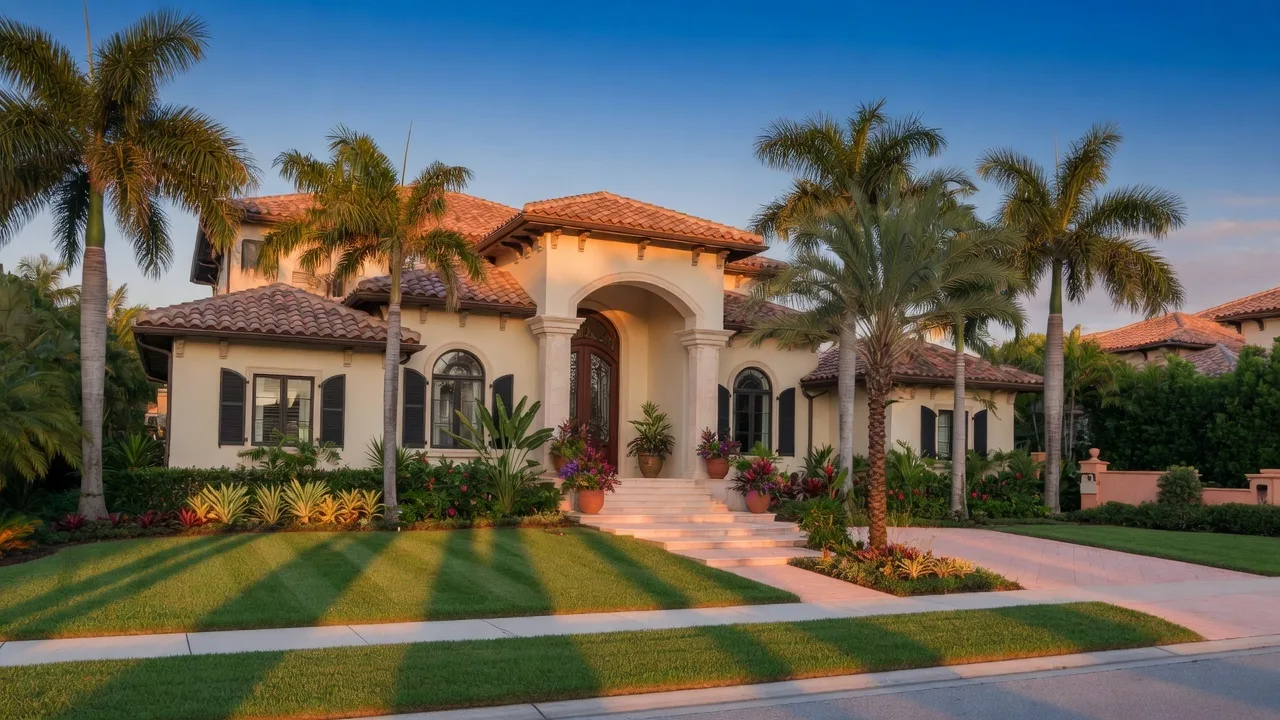
"How much is my home worth?" is the first question every seller asks — and it is the most important one to get right. The answer determines how you price, how buyers perceive your property, and ultimately how much equity you walk away with at closing.
In Southwest Florida, where the market moves differently than the rest of the country, getting an accurate valuation is not as simple as typing an address into a website. The algorithm on Zillow or Redfin does not know what your property looks like, whether your kitchen was updated last year, or whether the home across the street sold for a premium because it backs up to a preserve. It does not know the seasonal rhythms of the Naples luxury market or the premium buyers place on direct Gulf access.
An accurate home valuation requires a professional who understands the local market, the property itself, and the strategic levers that affect price. Here is what that process looks like — and why it matters.
Why Online Estimates Fall Short in Southwest Florida
Automated valuation models, or AVMs, are the technology behind the "Zestimate" and similar tools. They analyze public records, tax assessments, and recent sales data through an algorithm that does not account for property condition, upgrades, or the nuances of a specific neighborhood.
In a market like Southwest Florida, the limitations are significant:
- Seasonal demand distorts the data. The market behaves differently in January than it does in July. Snowbirds, seasonal residents, and second-home buyers concentrate activity in the winter and early spring, creating a demand surge that online algorithms do not capture well.
- Luxury properties are harder to model. Homes above $1 million in Naples, Bonita Springs, and Estero often have unique features — waterfront access, golf course views, custom architecture, renovated interiors — that an AVM cannot evaluate. The algorithm averages broadly, and broad averages are meaningless for a property that does not fit the mold.
- Neighborhood variation is invisible. Two homes in the same ZIP code may sit in very different communities — one with a guard gate, private golf membership, and canal frontage, the other on a busy road with no amenities. An online estimate treats them as if they are comparable.
- Condition and upgrades are ignored. A home with a new roof, impact windows, a renovated kitchen, and updated landscaping will sell for more than a comparable home that needs work. But the algorithm does not know the difference.
Online estimates can be a useful starting point for general awareness, but they are not a reliable basis for a pricing decision. Relying on them can lead to overpricing — which chases buyers away — or underpricing, which leaves equity on the table.
What Goes into a Proper Home Valuation
A professional comparative market analysis is far more thorough than an automated estimate. It evaluates several layers of data to arrive at a strategic price range, not a single number pulled from a database.
Comparable Sales, Properly Curated
The foundation of any valuation is recent sales of comparable properties — homes that are similar in size, age, condition, location, and features. But not every sale in the neighborhood is a true comparable. A good analysis filters out sales that do not reflect the current market, such as distressed sales, off-market transactions, or homes that sold months ago in a different market environment.
The most relevant comparables are typically sales within the same community or immediate area, closed within the last three to six months, with similar square footage, bedroom counts, and lot characteristics.
Active and Pending Listings
What is currently for sale — and what has gone under contract — tells you what your competition looks like and what buyers are actually choosing. If comparable homes in your neighborhood are sitting on the market for 90 days, that suggests a pricing or positioning issue. If listings are selling quickly at or above asking price, that signals demand.
Property Condition and Upgrades
A home that has been well-maintained and thoughtfully updated commands a premium. A valuation must account for the age and condition of the roof, HVAC, plumbing, and electrical systems; the quality of the kitchen and bathrooms; the state of the flooring, windows, and exterior finishes; and any recent renovations or additions.
In Southwest Florida, impact-rated windows and doors, a newer roof, and a well-maintained air conditioning system are particularly important. Buyers in this market are informed and discerning. They will pay more for a home that is move-in ready and properly documented.
Location Within the Neighborhood
Even within the same community, location matters. A home on a quiet cul-de-sac with a lake view is not the same as a home on a busy street near the entrance. A property that backs up to a preserve or golf course has different appeal than one adjacent to a commercial corridor. These factors affect value in ways that automated models cannot see.
How the Southwest Florida Market Differs from National Trends
National real estate headlines rarely capture what is happening in Southwest Florida. Our market has its own dynamics that directly affect property values:
- Seasonal demand. The concentration of buyers in the winter and early spring creates a window of peak activity. Homes listed in those months typically receive more showings and offers, which can support a higher price. Summer and fall tend to be slower, with fewer qualified buyers actively searching.
- Luxury market dynamics. Southwest Florida attracts a significant share of high-net-worth buyers, many of whom are relocating from higher-tax states or purchasing second homes. This demographic is less sensitive to interest rates and mortgage costs than the national average buyer. They are driven by lifestyle, tax advantages, and long-term wealth strategy — not just price per square foot.
- Snowbird and seasonal influence. A meaningful portion of the housing stock is owned by seasonal residents. Their buying and selling patterns are tied to the seasons, not to the national real estate cycle. This creates a market rhythm that looks different from the rest of the country.
- Migration-driven demand. Florida continues to see net in-migration from states like New York, Illinois, California, and New Jersey. Buyers relocating to Southwest Florida are often motivated by lifestyle change, retirement, tax strategy, or a desire for coastal access — factors that sustain demand even when other markets cool.
A valuation that does not account for these local dynamics will miss the mark. The right price for a Naples home in January is not necessarily the right price for the same home in August.
What Larissa Does Differently
I do not pull comps and stop there. Every valuation I prepare is built around understanding your property's position in the current market — and what that position means for your equity.
That means I look at the data, but I also look at the story behind it. Why did a comparable home sell for a premium? Was it the location, the finishes, the timing, or the marketing? Why is another home sitting? Is it overpriced, poorly marketed, or does it have a condition issue that a buyer discovered?
I evaluate your home's condition, upgrades, and curb appeal honestly. I consider the competitive landscape — what is currently for sale and what buyers are choosing. I factor in the season, the current absorption rate, and the specific buyer profile for your price range and community.
Then I present a pricing strategy — not just a number. A strategy that balances the goal of maximizing your equity with the reality of what the market will support. If the data suggests a range, I explain the trade-offs at each point in that range: the risk of sitting at the high end, the opportunity at the strategic middle, and the confidence of pricing where the evidence points.
My approach is grounded in the same patient-first, detail-oriented perspective that defined my 30-year healthcare career. I listen carefully, analyze thoroughly, and communicate clearly. My clients do not get a number and a handshake. They get a thoughtful, candid assessment of what their home is worth and how to position it for a successful sale.
The Cost of an Inaccurate Price
Price too high and your home sits on the market. Days accumulate. Buyers and agents begin to wonder what is wrong. The listing grows stale, and the eventual price reduction comes with a stigma that makes it harder to attract serious offers. The weeks of carrying costs — mortgage, insurance, HOA fees, utilities — add up, and the final sale price is often lower than what a strategic price from day one would have achieved.
Price too low and you leave equity on the table. In a market where buyers are willing to pay for quality, an underpriced home may generate multiple offers — but it can also sell for less than it is worth if the right buyer never has to compete. The goal is not to price low and create a bidding war. The goal is to price with precision, so the market responds with confidence.
Getting the Right Price Starts with a Conversation
An accurate valuation is not a data point you can find on a website. It is the result of a deliberate process that combines market knowledge, property expertise, and strategic thinking. For sellers in Southwest Florida, that process is essential to protecting the equity you have built.
If you are wondering what your home is worth — whether it is in Naples, Bonita Springs, Estero, Fort Myers, or anywhere across the Paradise Coast — I would welcome the opportunity to prepare a personalized market evaluation.
Wondering what your home is worth?
Contact Larissa Locke for a personalized market evaluation.