Buyer Guidance
Was This Home Affected by Recent Hurricanes, and Were Repairs Properly Permitted?

By Larissa Locke
Expert Real Estate Advisor · Integrity 🌴 1st 🌴 Group · eXp Realty · FL License #3407292
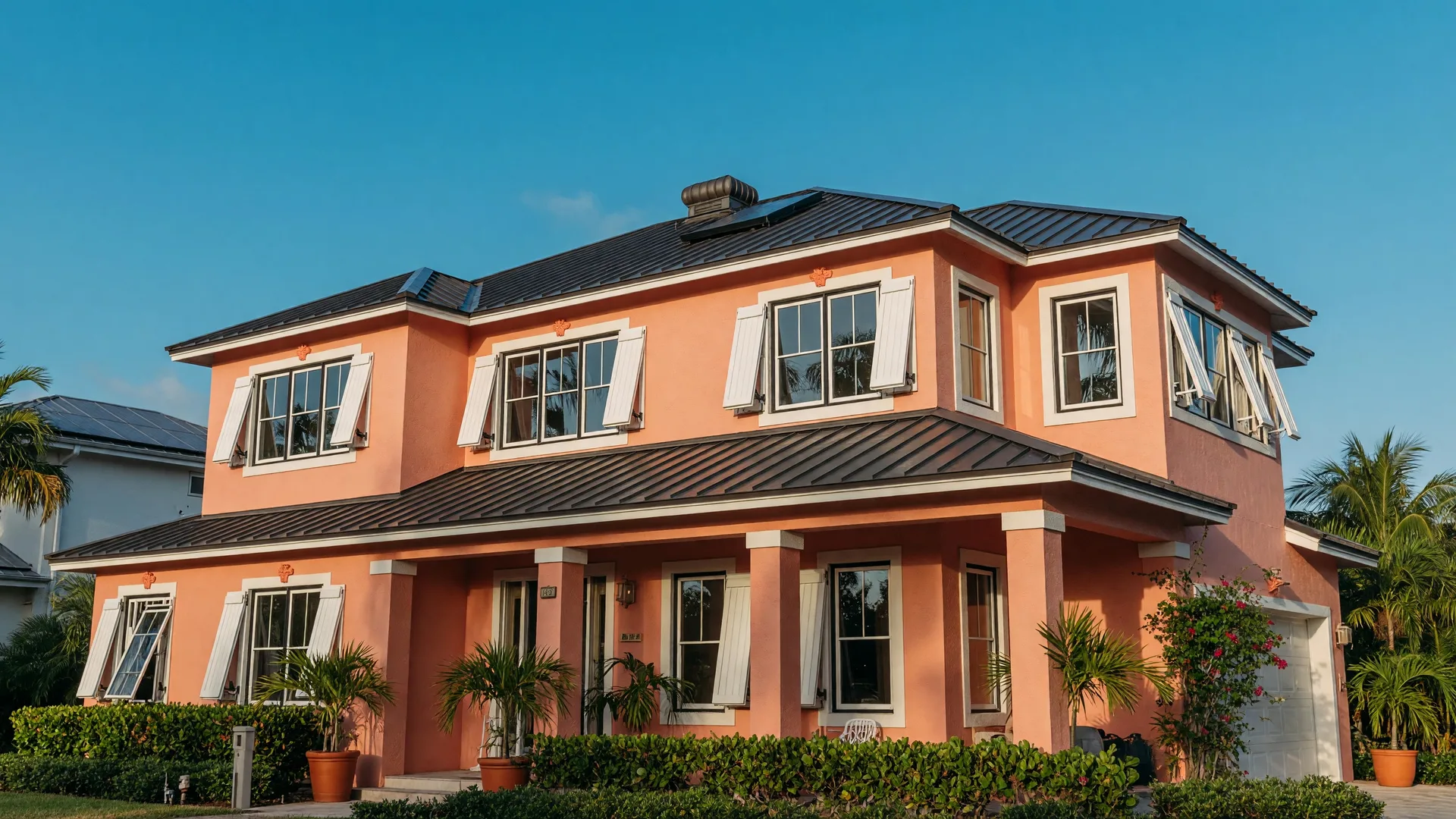
If you are buying a home in Southwest Florida in 2026, you are buying a property that has lived through hurricanes. Hurricanes Ian (2022), Irma (2017), and subsequent storms affected thousands of homes across Naples, Fort Myers, Bonita Springs, Estero, and the entire Paradise Coast. Some homes had minor cosmetic damage. Others required extensive structural repairs. And in a meaningful number of cases, those repairs were completed without the required building permits — or with work that did not meet current code.
This post is not meant to alarm you. It is meant to equip you. When you know what to ask and where to look, you can make an informed decision about any property in this market — with confidence instead of uncertainty.
Why this matters more in Southwest Florida than almost anywhere else
Southwest Florida is a hurricane-prone region by geography and climate. Homes here are built to withstand high winds, storm surge, and flooding — but only when construction meets the building codes in effect at the time of construction or renovation. When a property sustains damage and repairs are done improperly or without permits, the vulnerabilities remain. A roof that was patched instead of replaced to code. Electrical work that was never inspected. Drywall replaced behind cabinets without addressing mold behind it.
These issues do not always show up on a standard home inspection. And they may not surface at all until the next storm — or until you file an insurance claim and discover the repairs do not qualify for coverage.
What every buyer should ask about a property's hurricane history
Before you make an offer on any home in Collier or Lee County, ask your agent (or ask me directly) to help you investigate these five questions:
- Was the home in a storm surge zone during Ian or Irma? FEMA flood maps and local surge zone data will tell you whether the property experienced inundation. If it did, the potential for hidden water damage and mold is real — even if the home looks pristine today.
- Were insurance claims filed for hurricane damage? A CLUE (Comprehensive Loss Underwriting Exchange) report shows claim history. If multiple claims were filed, ask what was repaired and whether permits were pulled.
- Were repairs completed, and by whom? Licensed contractors pull permits. Unlicensed work often does not — and may not meet code.
- Were building permits pulled and closed? This is the single most important question. An open permit means the work was never inspected. No permit at all may mean the work was not done to code — or was done without proper oversight.
- Did the home receive a wind mitigation inspection? If it did, you will know the roof shape, deck attachment, opening protection, and other structural details that affect both safety and insurance premiums.
How to check permit records: Lee County and Collier County
Both Lee and Collier Counties maintain online permit databases that are publicly accessible. Here is how to use them:
Lee County. Visit the Lee County Building Department's online permit portal and search by property address or parcel ID. You will see a history of all permits pulled for the property — new construction, renovations, roofing, electrical, plumbing, mechanical, and storm-related repairs. A permit status of "Finaled" means the work passed inspection. "Open" or "Incomplete" means it did not.
Collier County. The Collier County Building Review Division offers a similar online portal. Search by address to see permit history, inspection records, and contractor information. Pay special attention to roofing and structural permits issued after 2017 — those are the most likely to be storm-related.
I check permit records on every property my clients consider. It takes a few minutes and can save you from years of frustration.
What is Florida's 50% Rule, and why should you care?
Florida's 50% Rule is one of the most consequential regulations in the state's building code — and one that many buyers (and some agents) overlook. Under this rule, if the cost of repair or improvement to a structure exceeds 50% of its market value, the entire structure must be brought into compliance with current building codes — not just the codes in effect when the home was originally built.
This is most commonly triggered after a hurricane. A home with significant damage may need repairs that exceed the 50% threshold. If that happens, the owner must bring the whole structure up to modern code — including wind load requirements, impact-resistant glazing, roof-to-wall connections, and more. This can be extraordinarily expensive.
What this means for buyers: if a home was damaged but the owner made only partial repairs — staying just under the 50% trigger — the home may not have been fully brought up to code. Conversely, if the 50% threshold was crossed and the home was properly rebuilt, it should meet current standards. Knowing which scenario you are looking at is essential.
The risks of unpermitted hurricane repairs
Unpermitted work in a hurricane-prone market is not a minor issue. It carries real, tangible risks:
- Insurance claim denial. If an insurer discovers that storm-related repairs were not permitted — or that existing damage existed before your policy began — they may deny coverage for future claims. This is happening with increasing frequency in Southwest Florida.
- Code violations. Unpermitted work can trigger code enforcement action, forcing you to tear out and redo work that was done improperly — at your own expense.
- Resale problems. When you go to sell the home, the buyer's due diligence will uncover the unpermitted work. You may lose the sale, have to reduce the price, or be required to obtain retroactive permits — which is difficult and expensive.
- Appraisal issues. Appraisers working on financed transactions may flag unpermitted additions or repairs, which can affect the appraised value or kill the deal entirely.
- Safety hazards. The most important reason: unpermitted repairs may not meet code, putting the home's occupants at greater risk in the next storm.
What is a wind mitigation inspection?
A wind mitigation inspection is a structural evaluation of how well a home is built to withstand high winds. It is specific to Florida and other hurricane-prone states, and it directly affects your homeowners insurance premium. The inspection typically covers:
- Roof shape — hip roofs perform significantly better in high winds than gable roofs
- Roof deck attachment — how the roof sheathing is fastened to the trusses
- Roof-to-wall connections — whether the roof is strapped or clipped to the walls
- Opening protection — whether windows, doors, and skylights are impact-rated or protected by shutters
- Secondary water barrier — an additional layer under the roof covering that prevents water intrusion if the primary covering is damaged
A favorable wind mitigation inspection can reduce your insurance premium significantly — often by hundreds or even thousands of dollars per year. If the home you are buying does not have a recent wind mitigation report on file, ordering one before closing is a smart investment.
How Larissa helps buyers navigate hurricane-related due diligence
In a market where storm history matters, working with an agent who knows how to investigate that history is a meaningful advantage. Here is what I do for every buyer client considering a property in Southwest Florida:
- Pull county permit records — I check Lee and Collier databases for every property under consideration, looking for roofing permits, structural permits, and any open or incomplete work.
- Review CLUE claims history — I help my clients request and interpret loss-underwriting reports that reveal past insurance claims.
- Coordinate wind mitigation inspections — I can recommend certified inspectors and help you understand what the report means for your insurance costs and safety.
- Flag red flags before you commit — If a property has red flags — open permits, suspiciously recent cosmetic work, gaps in repair history — I flag them and help you decide whether to proceed, negotiate, or walk away.
- Connect you with qualified contractors and inspectors — If you need a second opinion or a deeper look, I maintain a network of trusted professionals who know the local building codes and storm-resilience standards.
My approach comes from a simple belief: informed buyers make better decisions. I would rather help you investigate a property thoroughly before an offer than watch you deal with unexpected problems after closing.
Buying in hurricane country?
Larissa makes sure you know exactly what you are getting — permit history, storm exposure, wind mitigation, and every detail that affects your investment and peace of mind.
Larissa Locke is an Expert Real Estate Advisor with Integrity 🌴 1st 🌴 Group at eXp Realty, serving Naples, Bonita Springs, Estero, Fort Myers, and the greater Southwest Florida market. FL License #3407292.