Selling Strategy
How Do We Handle Multiple Offers on My Southwest Florida Home?

By Larissa Locke
Expert Real Estate Advisor · Integrity 🌴 1st 🌴 Group · eXp Realty · FL License #3407292
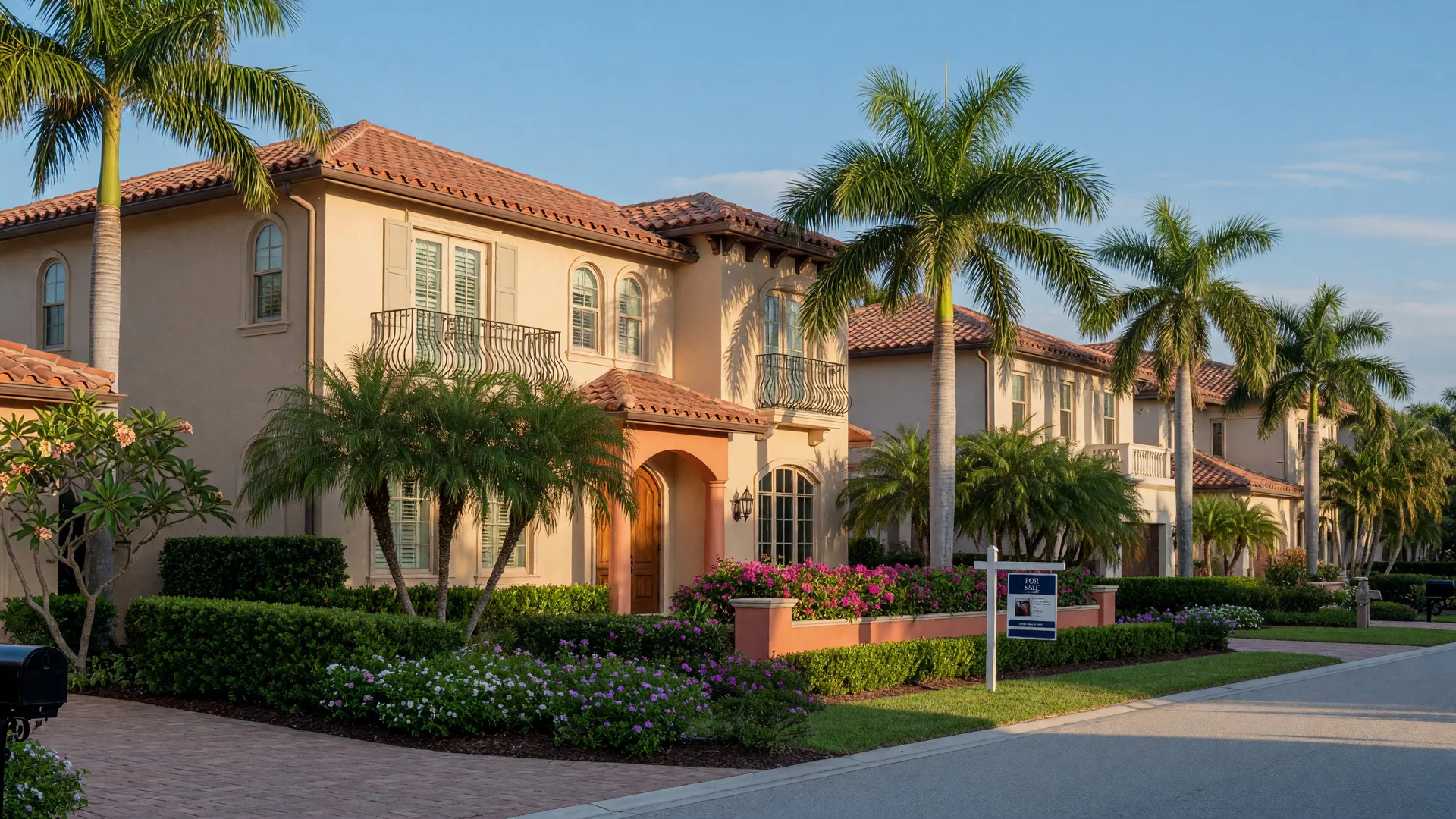
One of the most frequent questions sellers ask me during our first conversation is what happens if they receive more than one offer. The short answer is that multiple offers are a favorable position to be in — but they also add complexity. How you evaluate and respond to competing offers can significantly affect your net proceeds, your timeline, and whether the transaction closes at all.
Below is a clear, strategic breakdown of what multiple offers look like in the Southwest Florida market, how to evaluate them beyond the headline number, and what role an experienced advisor plays in guiding you through the decision.
When do multiple offers happen?
Multiple offers occur when buyer demand for a property exceeds the seller's supply of that specific home. This happens most often with properties that are priced accurately for their condition, location, and market segment — and that are presented well with professional photography, strategic marketing, and broad agent outreach.
In Southwest Florida, desirable properties in Naples, Bonita Springs, Fort Myers, and Estero routinely attract competing offers. The region's seasonal market — particularly during winter and early spring — brings a concentrated pool of qualified buyers, many of whom are relocating, downsizing, or purchasing second homes. When a home is priced to reflect current market conditions, the combination of limited inventory and strong buyer demand can generate offers within the first week of listing.
The key variable is pricing precision. A property priced above what comparable sales support will not generate multiple offers — it will sit. A property priced with strategic precision, by contrast, invites competition because buyers recognize value before anyone else acts on it.
What do multiple offers look like?
No two offers are identical. When a property attracts multiple buyers, the offers can vary significantly:
- Different purchase prices. Some buyers lead with their strongest number up front. Others test the seller's reaction with a lower starting figure.
- Different terms. One buyer may request a longer due diligence period. Another may ask for the seller to contribute toward closing costs. Terms like leaseback requests, repair caps, and inclusion of personal property can all vary.
- Different contingencies. Some offers come with an inspection contingency, a financing contingency, an appraisal contingency, or a home-sale contingency. Others carry none — or waive them entirely.
- Different timelines. One buyer may need 60 days to close. Another may be ready in 30 — or can close on the seller's exact preferred date.
Each of these variables affects the strength and reliability of an offer. Comparing them requires looking at the full picture, not just the top line.
How do you evaluate offers beyond the purchase price?
The highest dollar amount is not always the strongest offer. A disciplined evaluation weighs several factors:
- Cash versus financing. A cash offer typically has the lowest risk of falling through. It requires no appraisal contingency (unless the buyer chooses to include one), no lender timeline, and no financing conditions. A cash buyer can often close in two to three weeks. A financed offer, by contrast, depends on the lender's ability to process the loan, the property's appraised value, and the buyer's financial qualifications.
- Inspection contingencies. An offer with a standard ten-day inspection period leaves room for the buyer to request repairs or credits. An offer that waives the inspection contingency entirely signals strong buyer commitment and removes a common renegotiation point.
- Appraisal gaps. In a financed transaction, the lender requires an appraisal to confirm the property's value. If the appraised value comes in below the contract price, the difference must be covered — either by the buyer bringing additional cash or by the seller reducing the price. An offer that includes an appraisal gap provision — where the buyer agrees to cover a shortfall up to a specified amount — reduces risk for the seller.
- Closing timeline. A buyer who can close on a timeline that aligns with the seller's next move — whether that is 30 days, 60 days, or a specific date tied to a home purchase or relocation — has structural value that goes beyond price.
- Buyer pre-approval strength. Not all pre-approval letters are equal. A letter from a reputable local lender with verified documentation carries more weight than a generic online pre-qualification. In a competitive situation, the listing agent can — and should — verify the buyer's financial position before recommending an offer to the seller.
These factors determine whether an offer closes. A high offer that falls apart after the inspection or fails to appraise is worth less than a lower offer that closes on time with no renegotiation.
The highest offer is not always the best offer
Consider a concrete example. A property in Naples receives two offers: one at $1.35 million with conventional financing, a standard inspection contingency, and a requirement that the seller make up to $15,000 in repairs; another at $1.28 million in cash with no inspection contingency, a seven-day close, and an appraisal gap waiver up to $40,000.
The headline number favors the $1.35 million offer by $70,000. But the cash offer carries substantially lower execution risk. No appraisal exposure. No inspection renegotiation. No lender delays. A faster close. The $1.28 million offer may actually yield higher net proceeds and certainly carries a higher probability of closing.
The highest number on the top line is not always the best offer for your specific goals. Evaluating offers requires looking at the full terms, the buyer's financial strength, and the likelihood of closing — not just the price.
What is the role of the listing agent in a multiple-offer situation?
In a multiple-offer scenario, the listing agent's role shifts from marketing and showing to advising and negotiating. Larissa coordinates the entire process: she collects and presents every offer clearly, verifies buyer qualifications, summarizes the key variables for the seller, and helps the seller understand what each offer really means — not just the headline number but the full picture of terms, risk, and timeline.
Her responsibility is to give the seller clarity. That means explaining why a lower-priced offer may be stronger based on its terms, and why a high-priced offer with multiple contingencies may carry meaningful risk. The decision belongs to the seller — but the analysis and recommendation should be grounded in data, not emotion.
How does Larissa create competitive tension ethically?
Creating competitive tension means letting prospective buyers know there are other parties interested in the property — without manipulating the process or fabricating competition. Ethically, the approach is straightforward: when multiple offers exist, we inform all parties that the seller is reviewing multiple offers and invite each buyer to submit their strongest terms.
There is no need to exaggerate or bluff. If the property is priced correctly and marketed effectively, the competition is real. The goal is to create a transparent process where each buyer understands the situation and has a fair opportunity to present their best offer. This approach generates the strongest possible terms for the seller while maintaining integrity with every party involved.
In some cases, a seller may choose to set a deadline for offer submission — giving all interested buyers a clear window to present their terms. This structure encourages buyers to lead with their strongest offer rather than negotiating in increments.
What happens after you accept an offer?
After the seller selects an offer, the property moves into the due diligence period — typically 10 to 15 days in a Florida transaction. During this window, the buyer conducts inspections, reviews disclosures, and finalizes financing. This is also when the second-best offer (often called the backup offer) matters: if the primary offer falls through, having a backup offer already in hand can save weeks of lost market time.
A skilled listing agent keeps backup offers organized and informed — not in a pressured way, but with a clear understanding that if the primary transaction proceeds smoothly, the backup is released. This protects the seller's position without creating unnecessary complexity.
How Larissa Approaches Multiple Offers
In my practice, the multiple-offer situation is one of the most consequential moments in a sale — and it is where experience and composure make a real difference. I have seen sellers leave thousands of dollars on the table by choosing the highest offer without evaluating the terms. I have also seen sellers accept a lower-but-stronger offer that closed smoothly while the higher one would have collapsed.
My approach is to give every seller a complete, honest picture of what each offer means — the price, the terms, the risk, the timeline — and then let them decide with confidence. There is no pressure and no rush. When the right offer comes in, you will know it because the data supports it.
If you are considering selling a property in Naples, Bonita Springs, Fort Myers, Estero, or anywhere across Southwest Florida, I would welcome the opportunity to walk through your specific situation. Every property is different, and every seller's goals are different. The first step is a straightforward conversation about what you want to achieve.
Multiple offers are one of the strongest positions a seller can be in — but only when they are navigated with strategy, transparency, and a clear understanding of what matters most to you. That is what experienced guidance looks like, and it is the standard I bring to every seller client.
When Multiple Offers Come In, You Want an Advisor Who Can Help You Choose the Right One
Larissa Locke brings calm strategic guidance and deep local market knowledge to every transaction. Contact her today.