Buyer Guidance
What Will My Property Taxes Be, and Do I Qualify for Florida's Homestead Exemption?

By Larissa Locke
Expert Real Estate Advisor · Integrity 🌴 1st 🌴 Group · eXp Realty · FL License #3407292
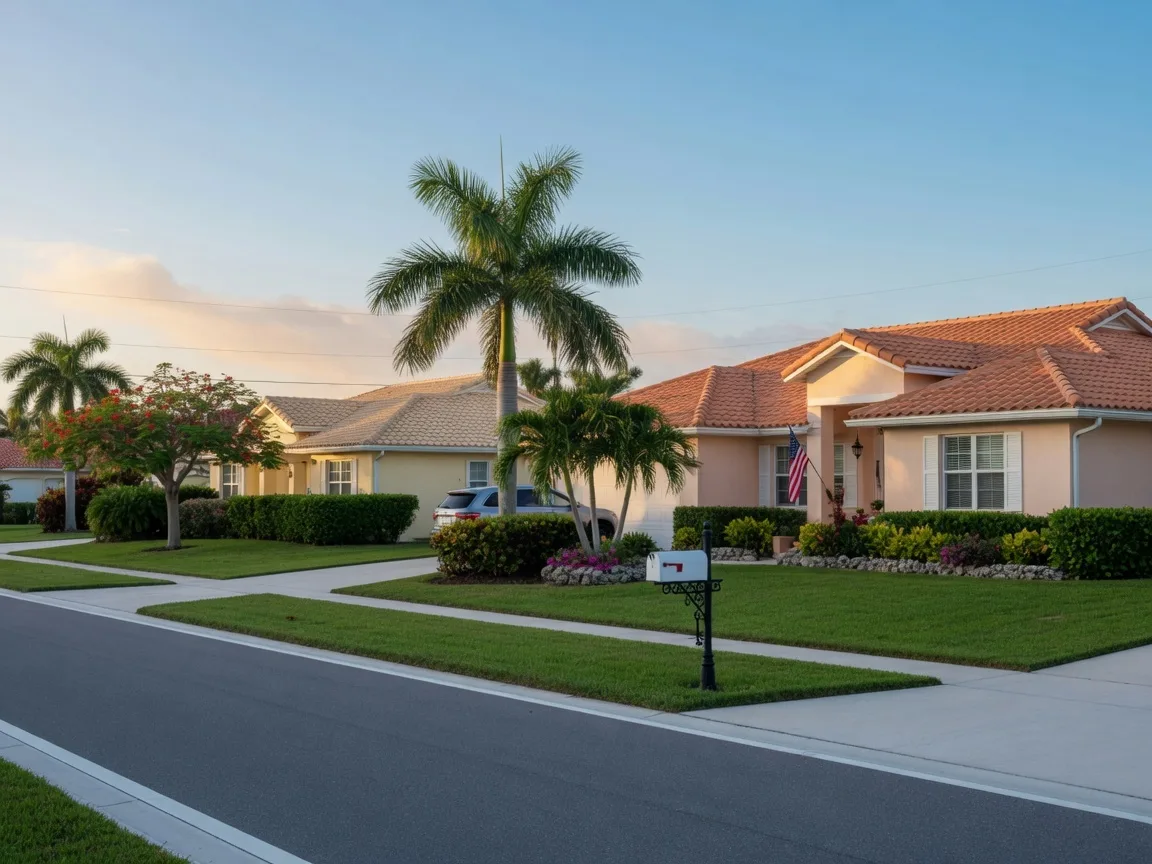
One of the most common questions buyers ask when purchasing a home in Southwest Florida is: What will I pay in property taxes, and is there anything I can do to reduce them? The answer matters — because property taxes in Florida vary by county, and the difference between what the current owner pays and what a new owner will pay can be significant.
This guide explains how Florida property taxes work, who qualifies for the Homestead Exemption, what the Save Our Homes cap means, and what buyers need to know before they close. If you are house hunting in Naples, Bonita Springs, Fort Myers, Estero, or anywhere along the Paradise Coast, understanding these numbers will help you budget accurately and avoid surprises.
How Florida Property Taxes Work
In Florida, property taxes are assessed at the county level. The county property appraiser determines the assessed value of your home, and the taxing authorities — county government, school board, municipalities, and special districts — set millage rates that determine how much you pay.
Your annual property tax bill is calculated as:
(Assessed Value − Exemptions) × Millage Rate ÷ 1,000 = Annual Tax
A mill is one dollar of tax per $1,000 of taxable value. If your home's taxable value is $400,000 and the combined millage rate in your area is 15 mills, your annual tax would be $6,000.
Assessed Value vs. Market Value
It is important to understand that assessed value and market value are not the same thing. The market value is what a willing buyer would pay for your home today. The assessed value is the value the county property appraiser assigns for tax purposes — and it may be lower than market value, especially if the property has been subject to the Save Our Homes cap (discussed below).
When you buy a home, the assessed value resets to the sale price (or a percentage of it, depending on the county). This is a critical point: if the seller had a Homestead Exemption and was paying taxes on an artificially capped assessed value, your taxes as a new owner will likely be higher.
County-Specific Millage Rates
Millage rates vary by county and by the specific taxing districts where the property is located. Here is a general overview of the two counties most relevant to Southwest Florida buyers:
Collier County (Naples)
Collier County's combined millage rate typically ranges from approximately 10 to 12 mills for most residential properties, depending on the municipality and special districts (fire, library, community development districts). Naples and Marco Island have their own municipal millage on top of the county rate. Actual rates vary by tax district, so the total rate depends on the property's precise location.
Lee County (Fort Myers, Bonita Springs, Estero)
Lee County's combined millage rate for most residential properties is typically between 13 and 16 mills, depending on the municipality, fire district, and other taxing authorities. Bonita Springs and Estero have their own municipal services that add to the total. Cape Coral also has its own rate structure with additional millage for utilities and amenities.
Because rates change annually and vary by specific location, the most reliable approach is to review the tax record for a specific property — your agent or title company can pull this information for any home you are considering.
Florida Homestead Exemption
The Florida Homestead Exemption is one of the most valuable tax protections available to homeowners. It reduces the assessed value of your primary residence by up to $50,000 before taxes are calculated.
Here is how it breaks down:
- First $25,000 — Applies to all property taxes, including school district taxes.
- Second $25,000 — Applies to non-school taxes only, and only when the assessed value is between $50,000 and $75,000.
On a home with an assessed value of $400,000 in a county with a combined rate of 15 mills, the Homestead Exemption saves approximately $750 per year on the school portion and additional savings on the non-school portion.
Save Our Homes Cap
In addition to the Homestead Exemption, Florida's Save Our Homes amendment limits annual increases in assessed value to 3% or the rate of inflation, whichever is lower. This means that for a homeowner who has held a property for many years, the assessed value can be significantly below market value.
This is a powerful protection for long-term residents — but it creates a tax gap for buyers. When a homesteaded property sells, the cap resets. The new owner's assessed value will be based on the sale price, not the seller's artificially low assessed value. The result: property taxes may be substantially higher than what the seller was paying.
Always ask what the current owner pays in taxes — but understand that your tax bill as the new owner will be different, often higher.
Who Qualifies for the Homestead Exemption?
To qualify for a Homestead Exemption in Florida, you must meet two basic requirements:
- You must be a Florida resident and a legal owner of the property.
- The property must be your primary residence as of January 1 of the tax year.
You can only claim a Homestead Exemption on one property — your primary residence. Vacation homes, second homes, and investment properties do not qualify. The exemption does not apply automatically; you must file an application with the county property appraiser's office.
How to Apply
Applying for the Homestead Exemption is straightforward, but timing matters:
- Deadline: March 1 of the year for which you are seeking the exemption.
- Where to apply: Your county property appraiser's office — Collier County Property Appraiser for Naples properties, Lee County Property Appraiser for Fort Myers, Bonita Springs, and Estero.
- Required documentation: Proof of Florida residency (driver's license or ID), proof of ownership (closing statement or deed), and a completed application (Form DR-501).
- One-time application: Once granted, the exemption renews automatically each year as long as you continue to live in the home.
If you close on a home after January 1, you will not qualify for the exemption in that tax year — but you can apply to have it take effect the following year. Your closing agent or real estate advisor can help you understand the timing.
What Buyers Need to Know About the Tax Reset
This is one of the most important and least understood aspects of Florida real estate taxes. When you buy a home that was previously homesteaded:
- The seller's assessed value was likely capped well below market value by Save Our Homes.
- After the sale, the assessed value resets to the purchase price (or a percentage determined by the county).
- Your property taxes may be significantly higher than what the seller was paying — even if the sale price is fair.
Here is a simplified example. Suppose the seller bought the home 15 years ago for $350,000. Through Save Our Homes, their assessed value might now be $420,000 — while the market value is $750,000. They were paying taxes on $420,000 (minus their Homestead Exemption). After you buy the home for $750,000, your assessed value resets to that amount. Your taxable value is roughly $700,000 after the exemption — nearly double what the seller was paying taxes on.
This does not mean the taxes are unreasonable — it means you need to budget for them accurately. Your lender will likely estimate property taxes in your monthly payment, but it is worth confirming that estimate is based on the sale price, not the seller's current tax bill.
Additional Exemptions
Beyond the standard Homestead Exemption, Florida offers several additional exemptions that may further reduce your tax burden:
- Widow / Widower Exemption. Available to surviving spouses who have not remarried. Provides a $5,000 reduction in assessed value. Must be filed with the county property appraiser.
- Veterans' Exemptions. Tax relief is available for disabled veterans and their surviving spouses. The exemption amount varies based on the disability rating. Florida also offers a combat-wounded veteran exemption and a total and permanent disability exemption.
- Disability Exemptions. Available to homeowners with certain permanent disabilities. The exemption amount depends on the nature of the disability and documentation requirements.
- Senior Exemption. Some counties offer additional exemptions for low-income seniors aged 65 and older, subject to income limits. Check with your county property appraiser.
Each of these exemptions requires a separate application with supporting documentation. Your county property appraiser's office can provide specific guidance on eligibility and deadlines.
The Bottom Line for Buyers
Property taxes are a real cost of homeownership in Florida, but they are also predictable and manageable when you understand how they work. The Homestead Exemption offers meaningful savings for primary residents, and the additional exemptions provide further relief for qualifying homeowners.
The key takeaway: never assume your tax bill will match the current owner's. Ask for the current tax record, then work with your advisor to estimate what your actual taxes will be after the sale. Knowing that number before you make an offer means no surprises in your monthly budget.
I walk every buyer through this calculation before we write an offer — because part of making a confident decision is understanding exactly what the home will cost to carry, not just what it costs to buy.
Have Questions About Property Taxes?
Larissa will help you understand the real numbers before you buy. Call or email to get the full picture.
Larissa Locke · Expert Real Estate Advisor · Integrity 🌴 1st 🌴 Group at eXp Realty · FL License #3407292 · Serving Naples, Bonita Springs, Estero, Fort Myers, and all of Southwest Florida.